The Collection
Landscape, architecture, and wildlife — shot across four continents.
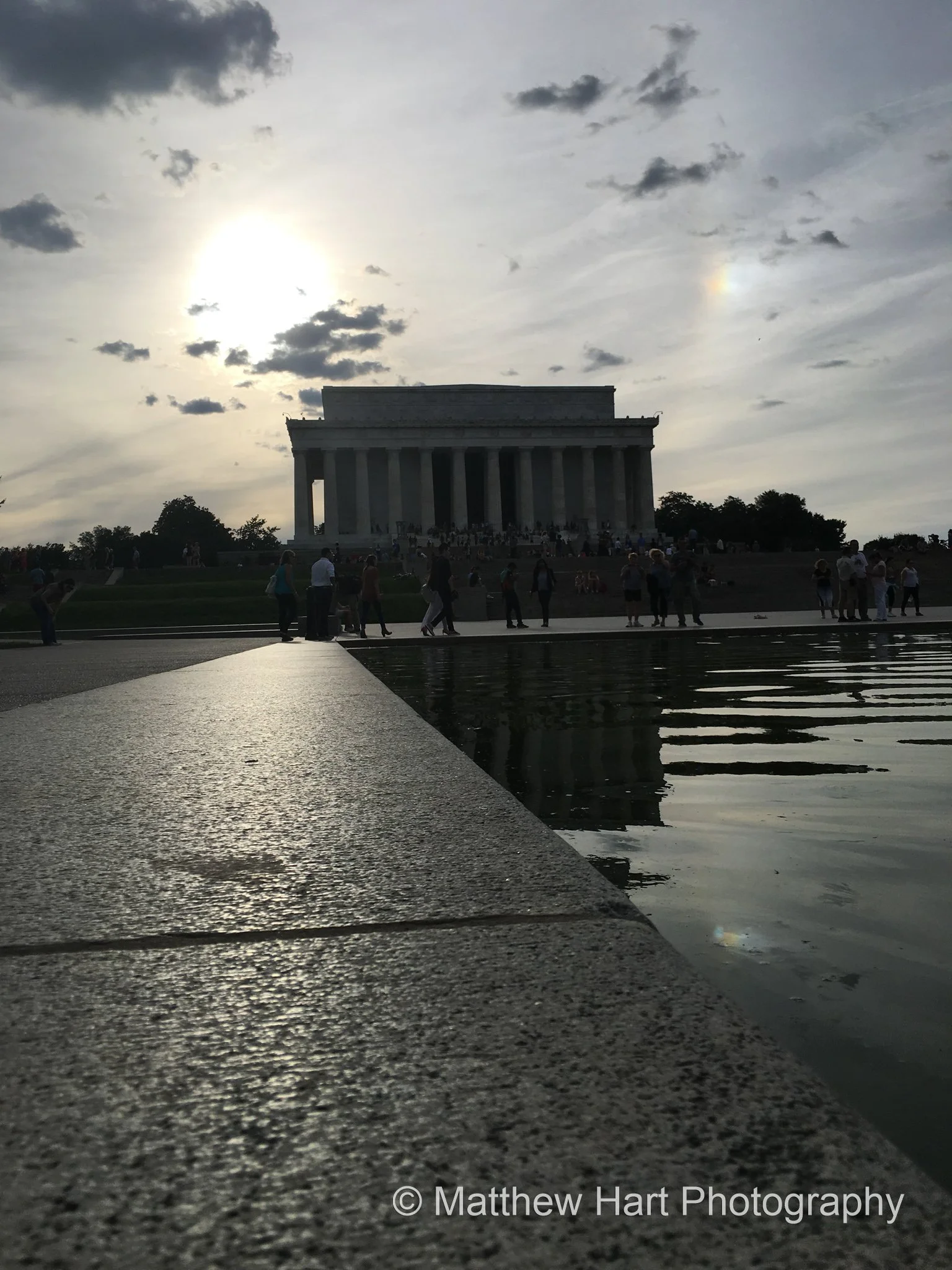
The Lincoln Memorial stands across the Reflecting Pool, its colonnade mirrored in the dark water. The granite edge of the pool runs as a strong diagonal from the lower left, and above the memorial the sun burns through a hazy sky, with a small rainbow sundog glowing off to its right among scattered clouds.
Sundogs form when sunlight passes through ice crystals high in the atmosphere, and they come and go within minutes. Catching one above the memorial adds a quiet, almost ceremonial note to one of the most photographed views in the country.
Printed with pigment-based inks for lasting quality and rich tonal depth. Available on archival fine art paper, canvas, or metal.
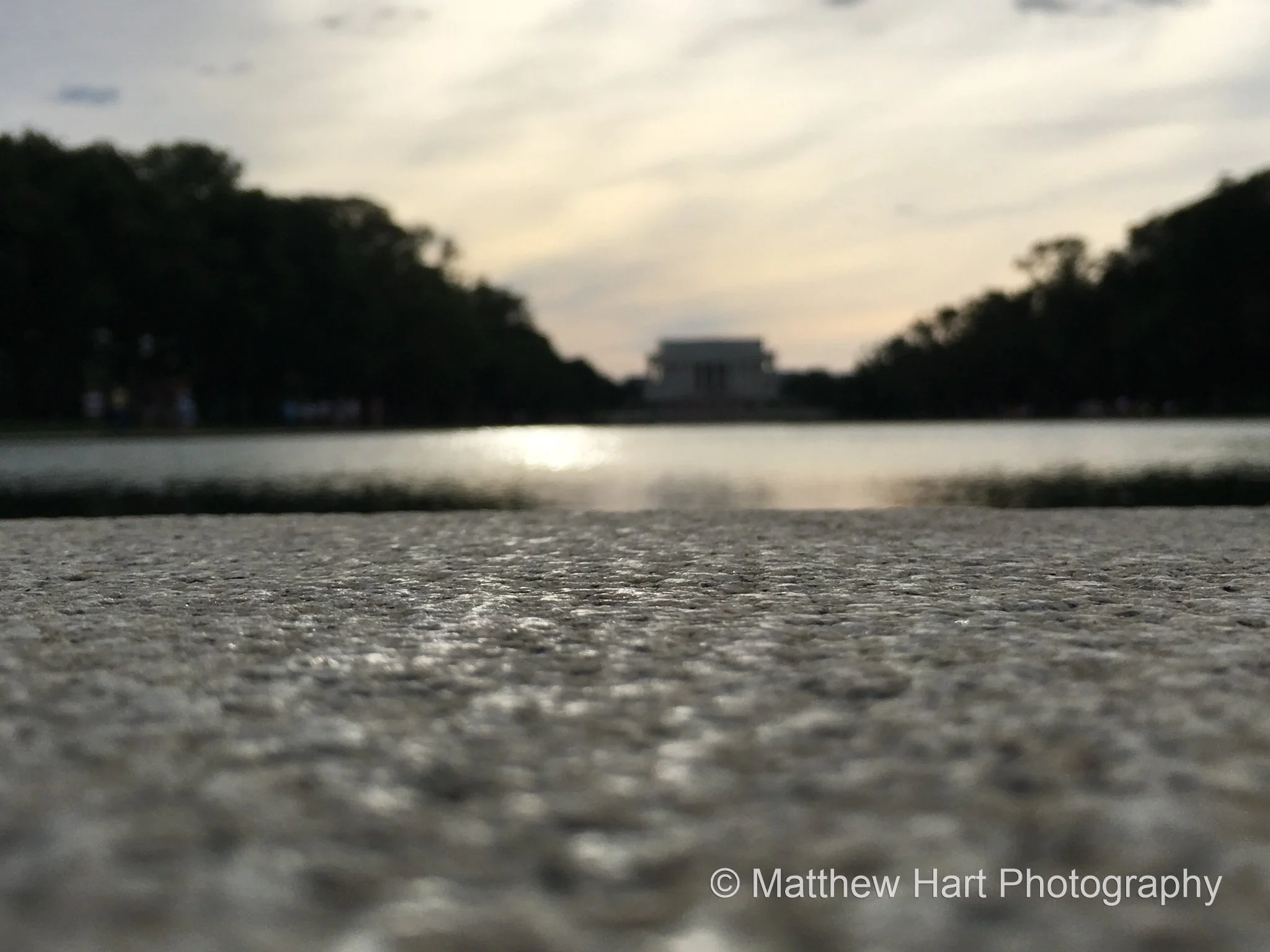
A ground-level view along the granite edge of the Reflecting Pool, the stone sharp in the foreground before the focus softens across the water. The Lincoln Memorial sits small and centered at the far end, framed by dark tree lines on either side under a soft, glowing sky.
Most photographs of the Mall look down its length from eye level. Dropping the camera to the stone changes the scale entirely: the texture of the granite becomes the subject, and the memorial becomes a quiet destination at the end of it.
Printed with pigment-based inks for lasting quality and rich tonal depth. Available on archival fine art paper, canvas, or metal.
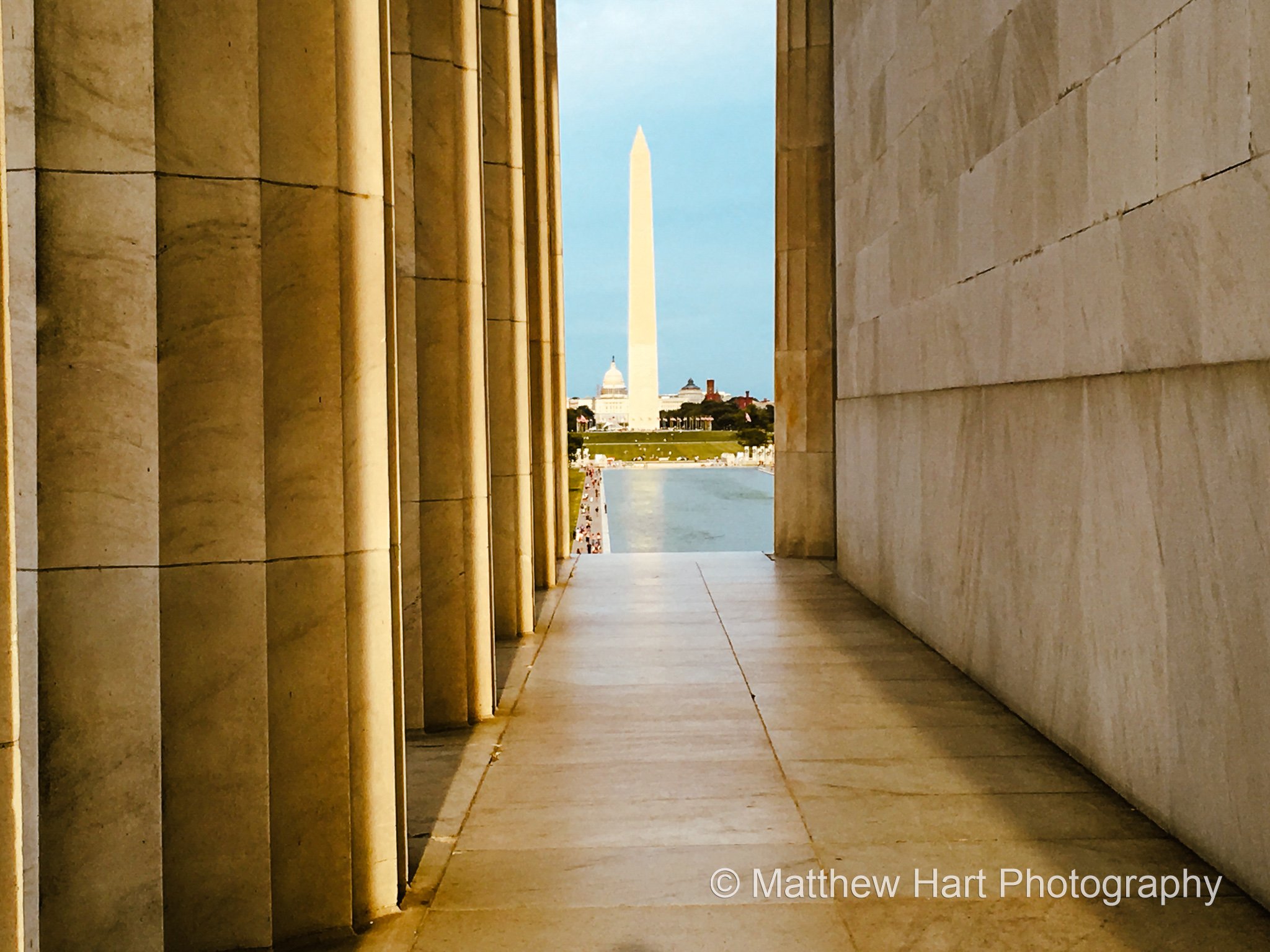
The Washington Monument framed through the colonnade of the Lincoln Memorial. Warm marble columns crowd the left side of the frame and a smooth stone wall closes the right, leaving a narrow opening onto the Reflecting Pool and the obelisk rising beyond it.
This view links two of the Mall's great monuments in a single line. The heavy, sunlit stone in the foreground makes the distant obelisk feel even farther away, and the composition pulls the eye straight down the corridor.
Printed with pigment-based inks for lasting quality and rich tonal depth. Available on archival fine art paper, canvas, or metal.
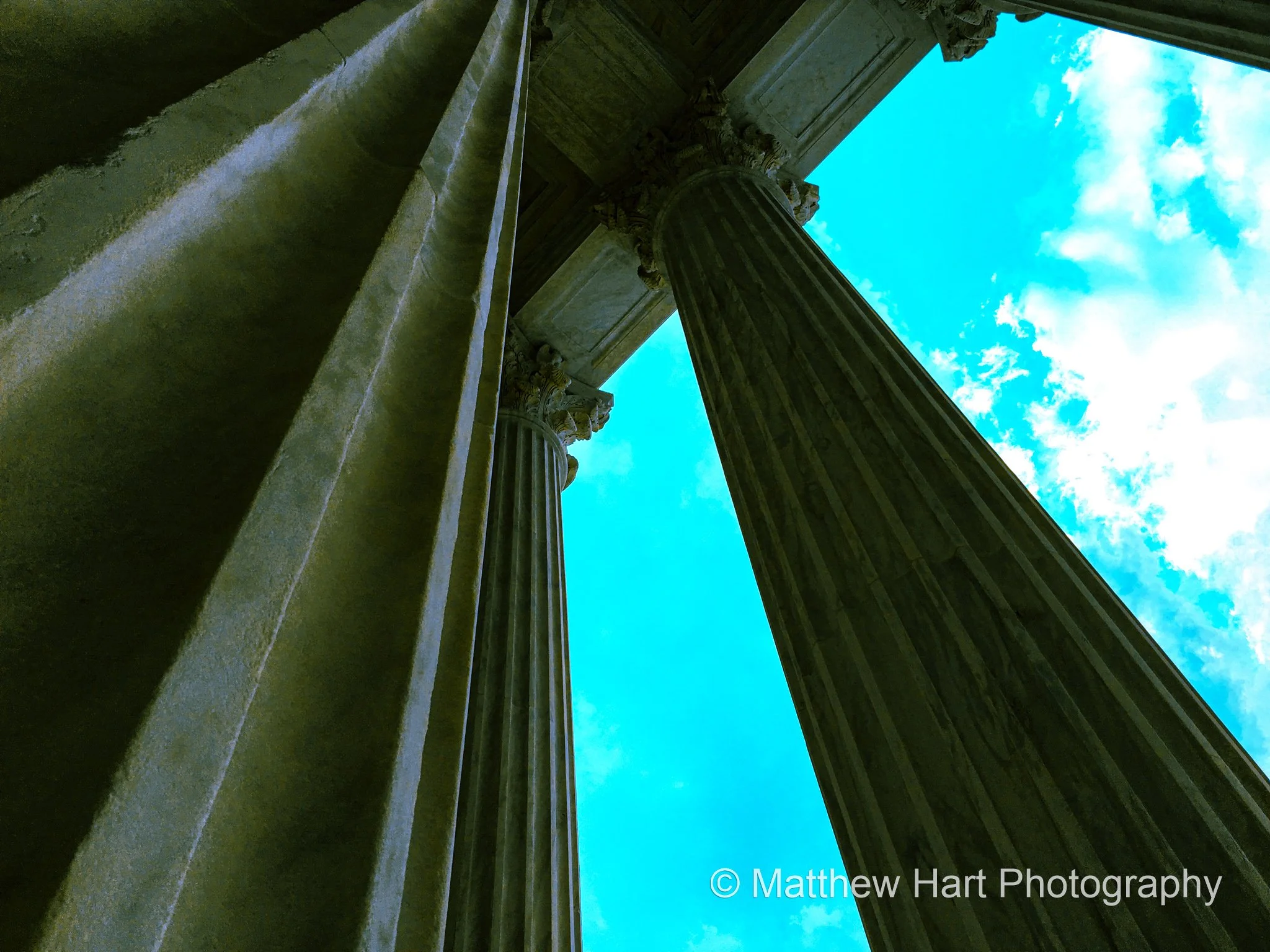
Looking straight up between massive fluted columns with ornate Corinthian capitals in Washington, D.C. The shafts converge toward the top of the frame, their stone cast in deep, cool shadow, while a vivid patch of blue sky and white cloud opens between them.
Washington's neoclassical buildings were designed to make a visitor feel small, and this angle leans into that. The converging lines and strong contrast between shadow and sky turn familiar architecture into something close to abstract.
Printed with pigment-based inks for lasting quality and rich tonal depth. Available on archival fine art paper, canvas, or metal.
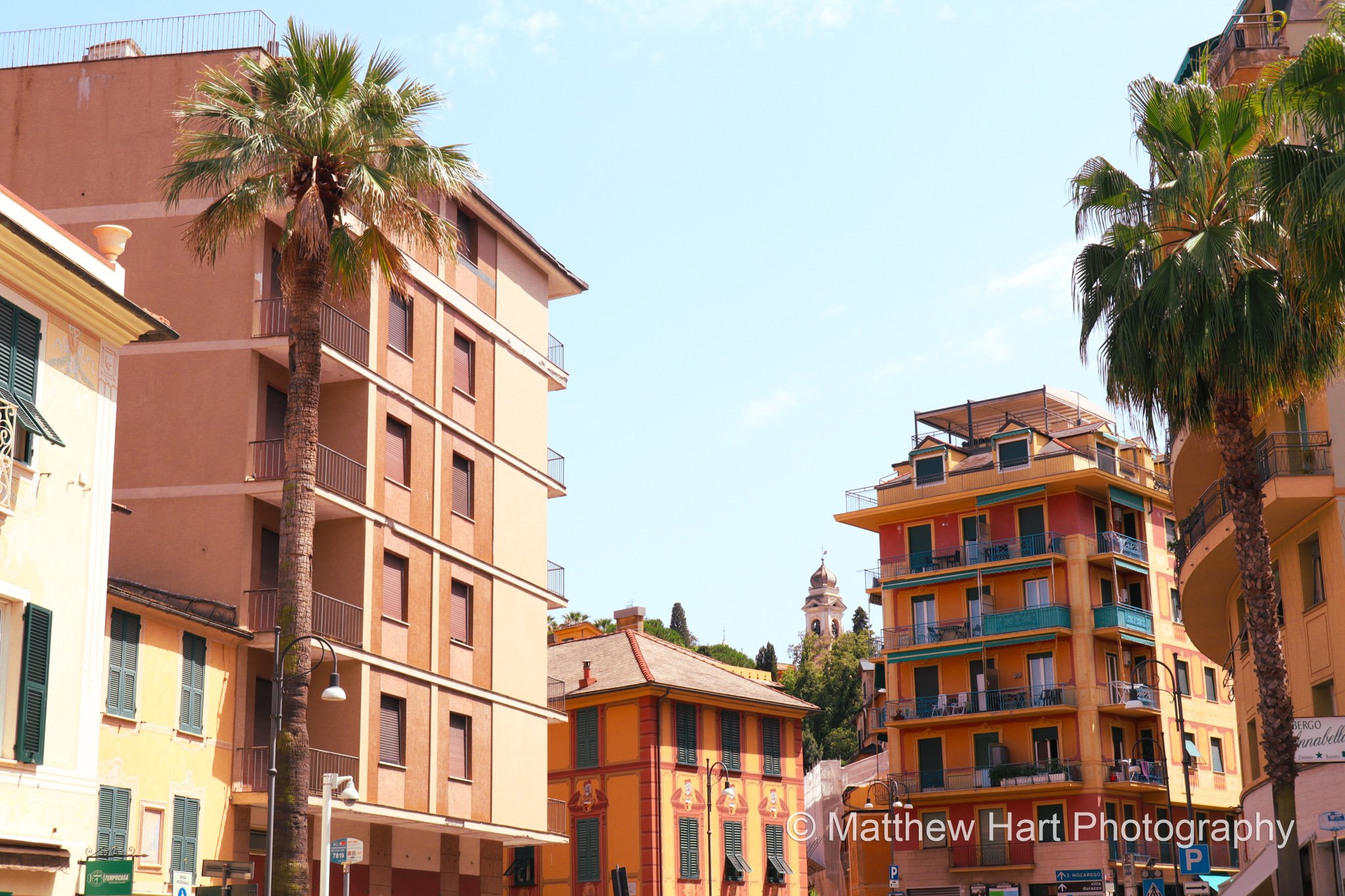
Tall palms rise between apricot and coral apartment buildings in Santa Margherita Ligure, their balconies and green shutters stacked in neat rows against a pale blue sky. In the middle, an ochre house wears the painted window frames typical of Ligurian façades, and a distant bell tower rises among the trees behind it.
The warm façades are typical of the Ligurian coast, and the palms frame the scene on either side like curtains. It is an everyday view of the town, made graphic by color and repetition.
Printed with pigment-based inks for lasting quality and rich tonal depth. Available on archival fine art paper, canvas, or metal.
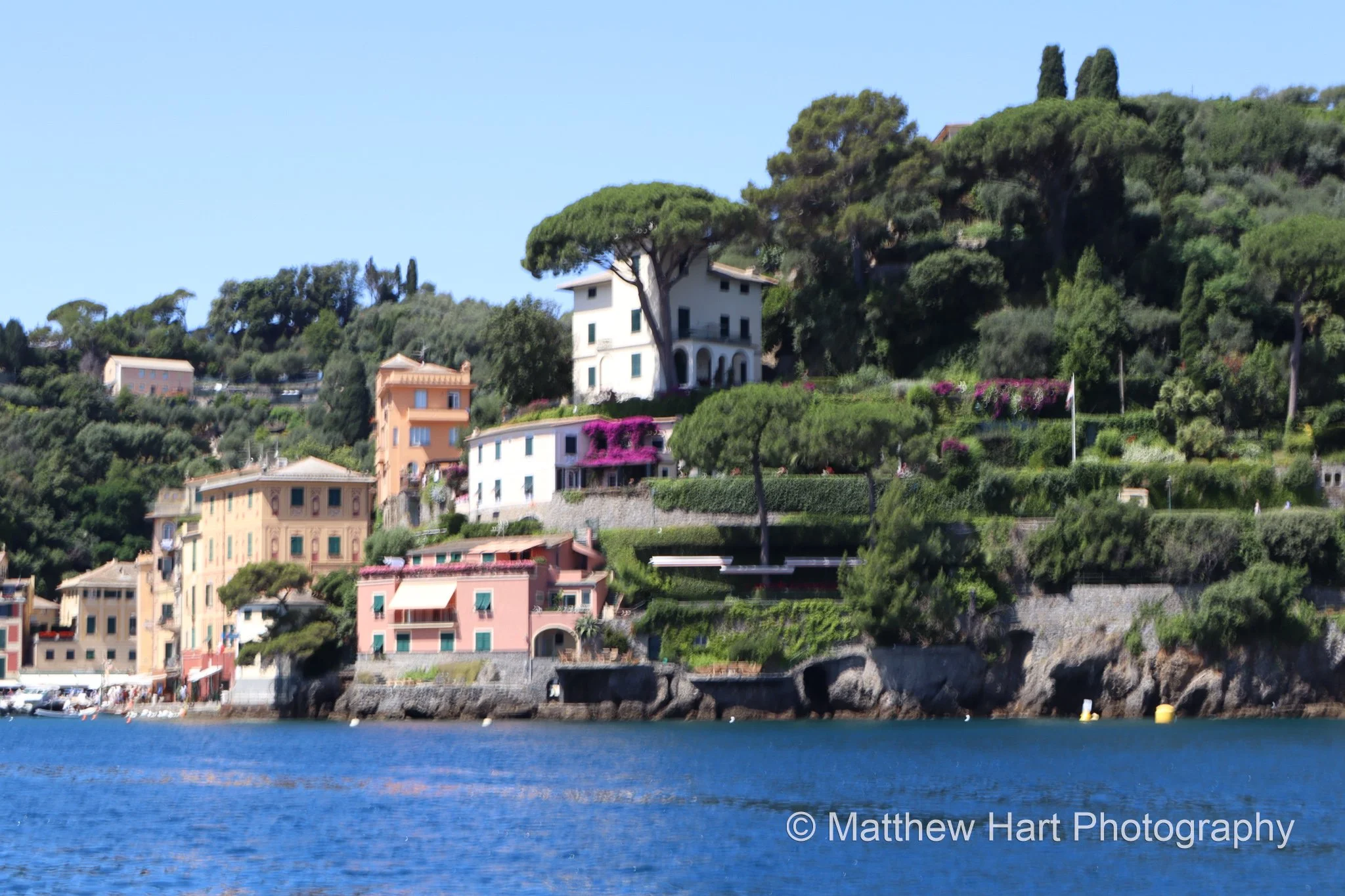
A small cove on the Ligurian coast, where pink, ochre, and cream houses sit right at the water's edge beneath a steep, green hillside. Umbrella pines crown the slope, tall cypresses stand among the gardens, and a white villa looks down from above. The sea in front is a saturated, deep blue.
This is the Riviera most people picture: color, greenery, and water pressed close together in a tight, sheltered space. The dense vegetation and stacked buildings give the frame rich texture from edge to edge.
Printed with pigment-based inks for lasting quality and rich tonal depth. Available on archival fine art paper, canvas, or metal.
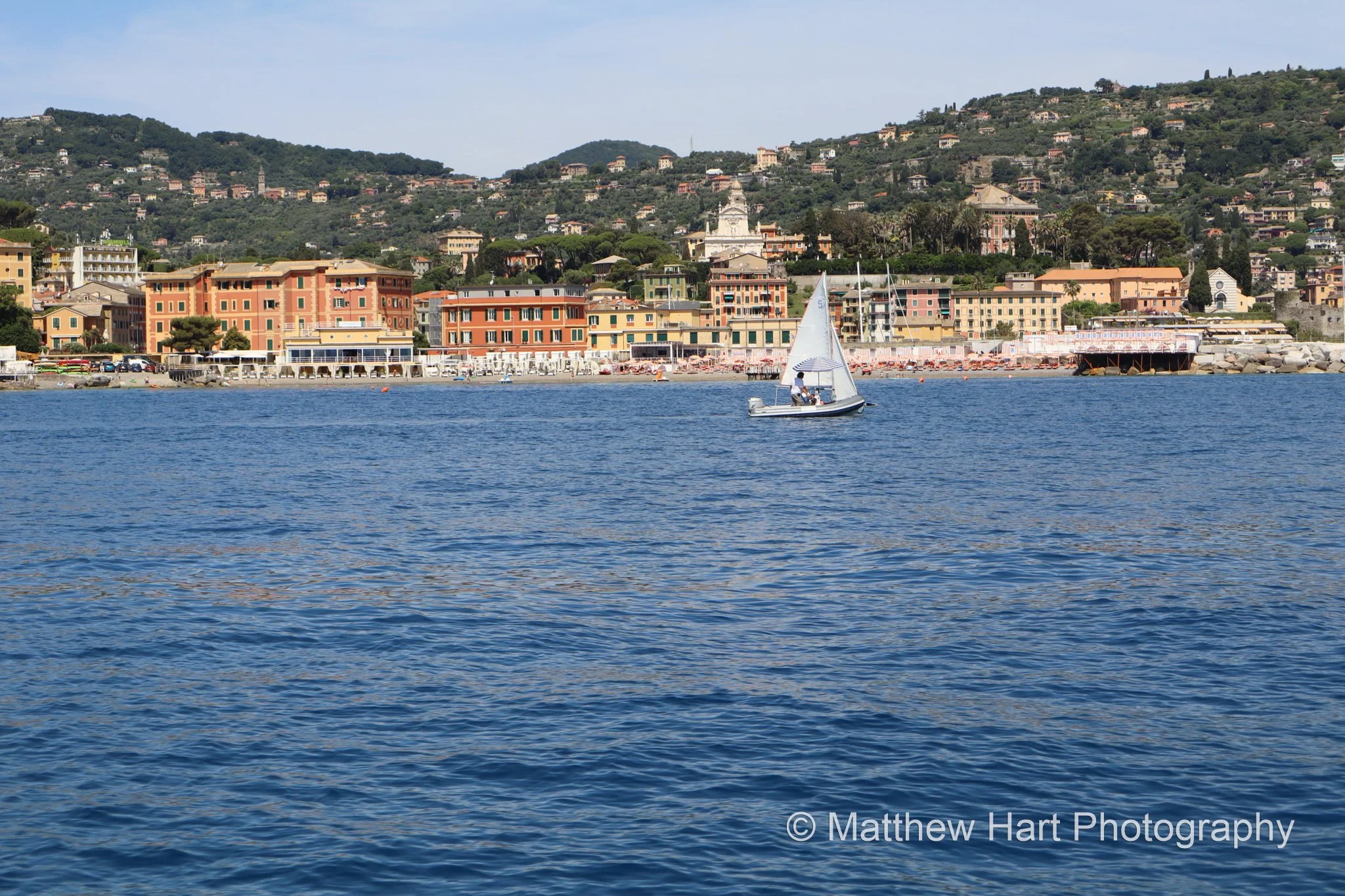
A single white sailboat crosses a wide stretch of blue water in front of a Riviera town. The seafront is a long band of pastel buildings, hotels, and palms, with wooded hills rising steeply behind and villas scattered across the slopes.
The boat is small in the frame, which is the point: one bright mark of movement against the calm of the bay and the solidity of the shore. It captures the slow pace of a Ligurian summer day.
Printed with pigment-based inks for lasting quality and rich tonal depth. Available on archival fine art paper, canvas, or metal.
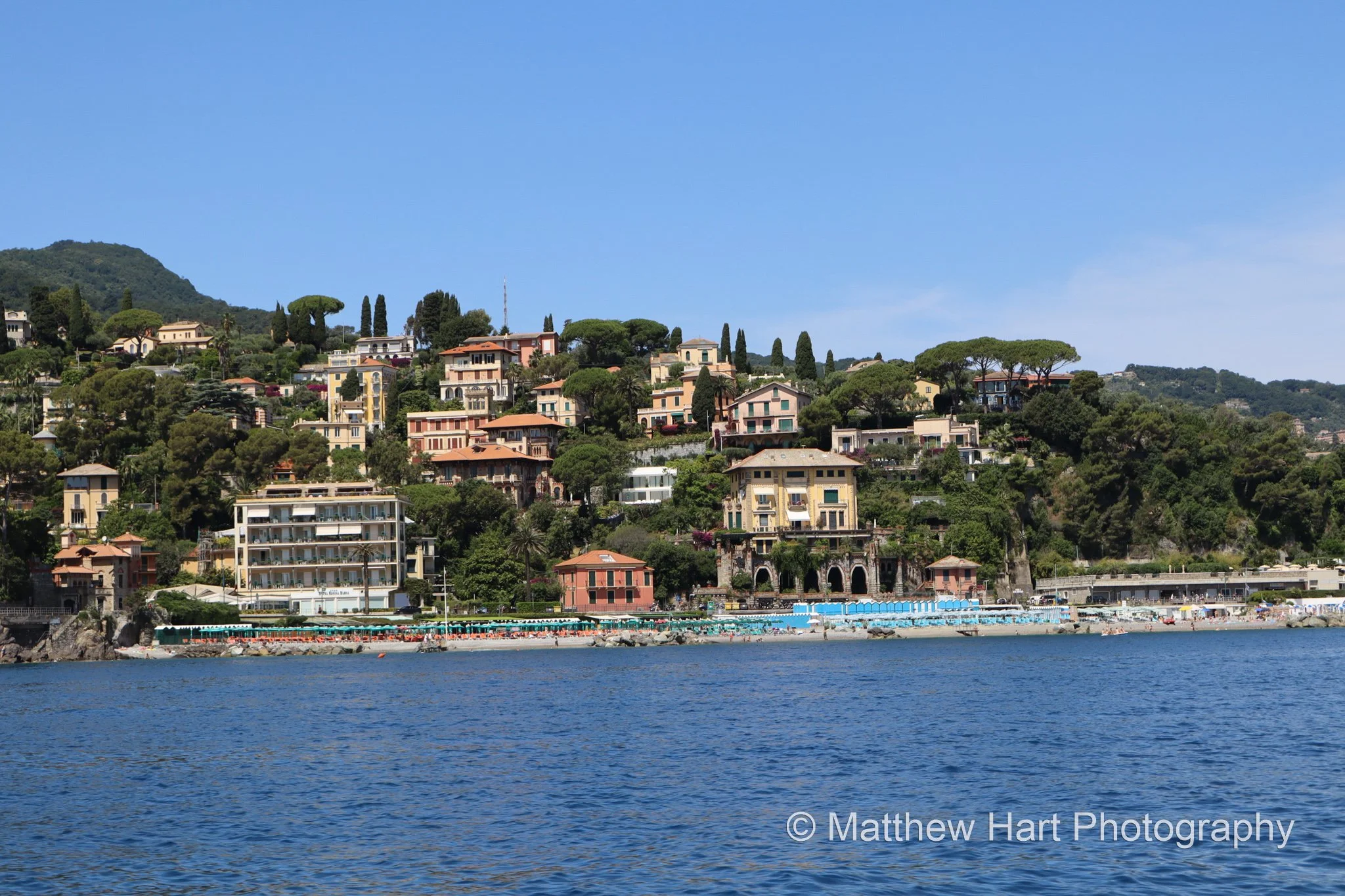
A wooded Ligurian hillside above the water, its slopes scattered with villas in cream, terracotta, and pale yellow among umbrella pines and dark cypress. A thin line of waterfront runs along the base of the hill, and the sea fills the foreground.
These coastal hills have drawn summer residents for well over a century, and the villas sit among the trees as if they grew there. The image balances architecture and landscape almost evenly, with the water giving it room to breathe.
Printed with pigment-based inks for lasting quality and rich tonal depth. Available on archival fine art paper, canvas, or metal.
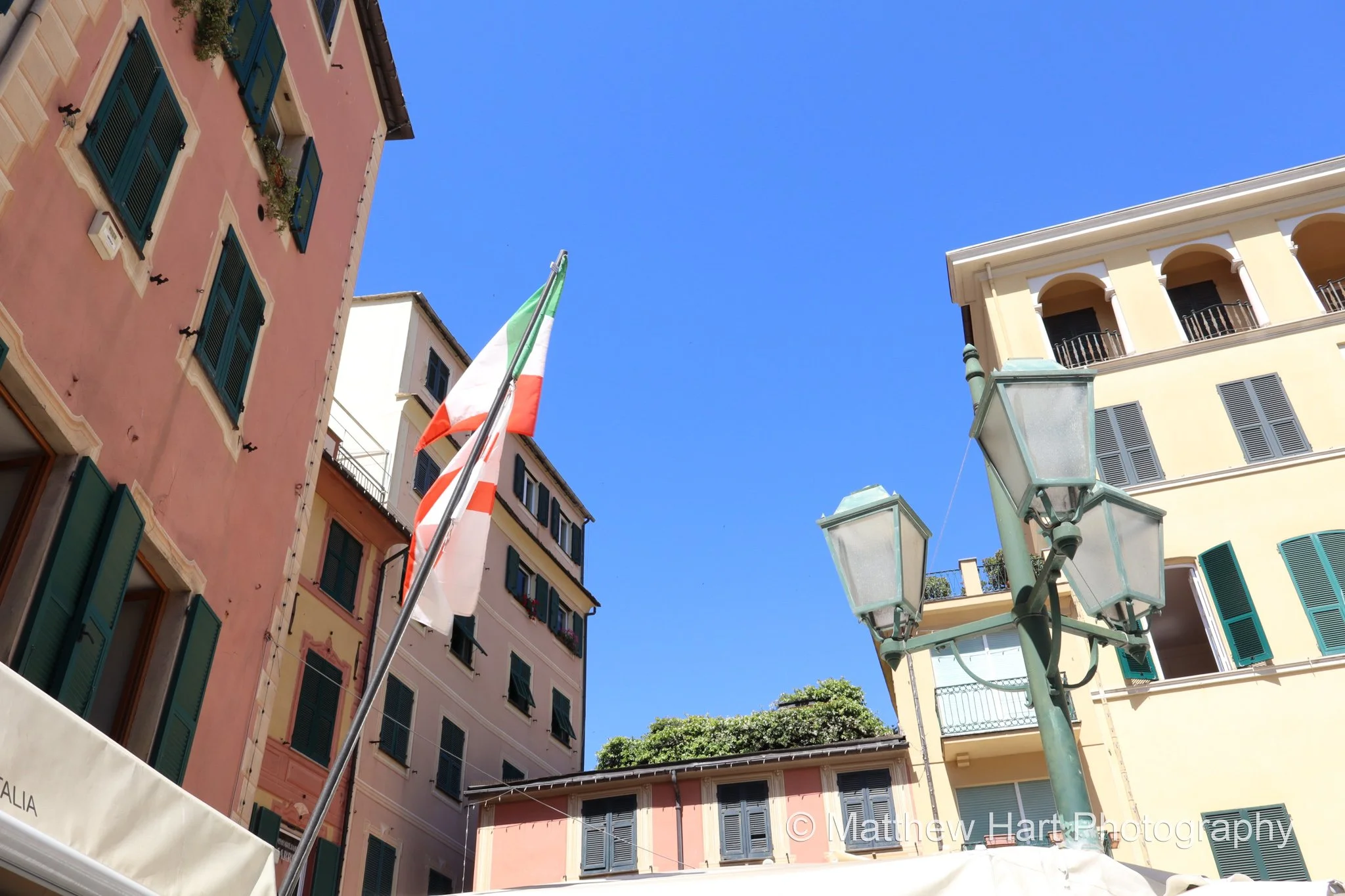
A low, tilted view up into a Santa Margherita Ligure street. The Italian tricolore angles across the center of the frame between a coral façade on the left and a pale yellow building with arched windows and green shutters on the right, with ornate street lanterns and a deep blue sky filling the gaps.
The off-kilter angle gives the scene energy, and the colors do the rest: red, white, and green in the flag, echoed in the shutters and walls around it. It reads as a small, joyful piece of the Riviera.
Printed with pigment-based inks for lasting quality and rich tonal depth. Available on archival fine art paper, canvas, or metal.
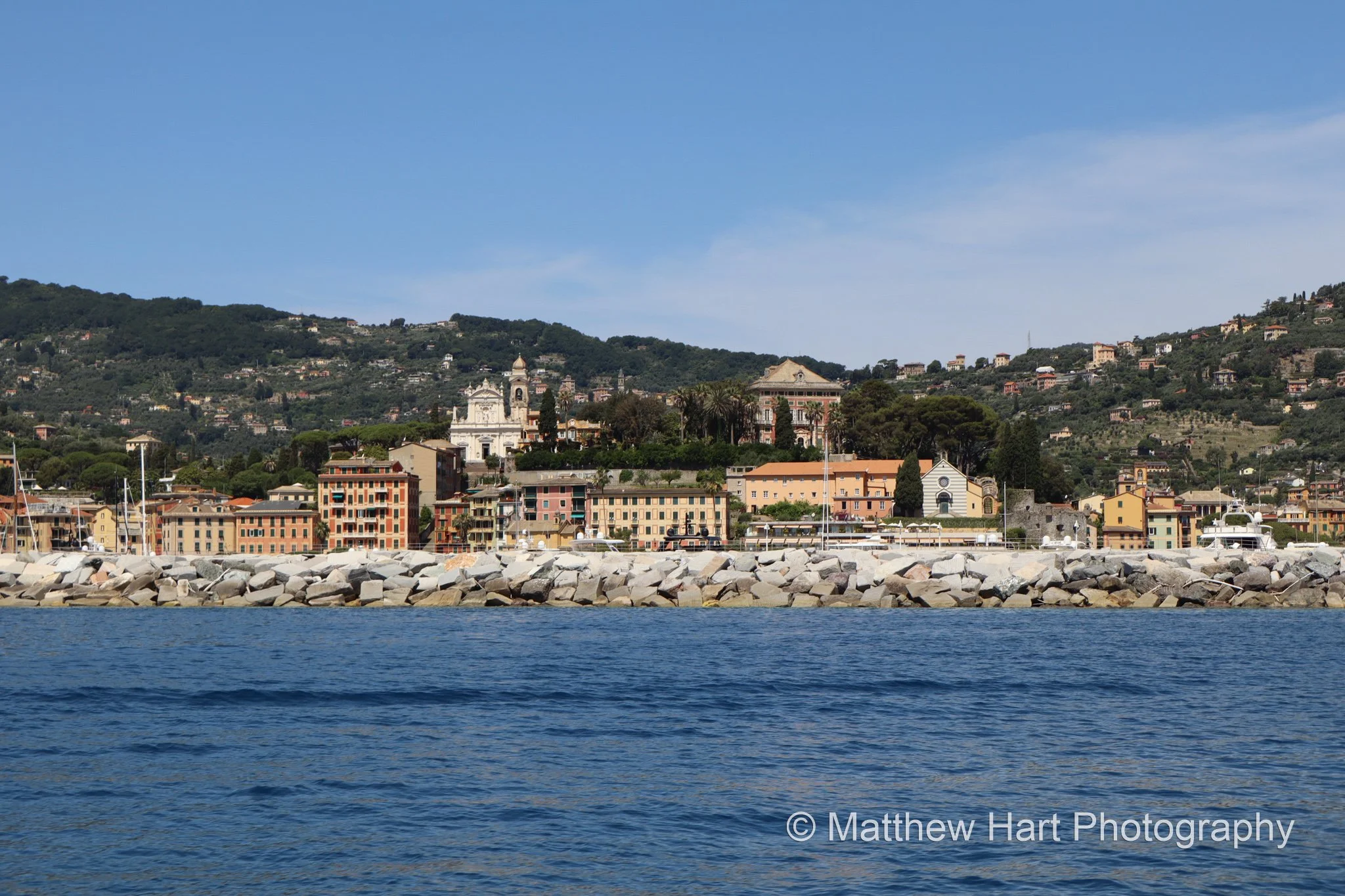
Santa Margherita Ligure seen from the sea, sheltered behind its long stone breakwater. A white baroque church façade and bell tower rise above rows of warm-toned buildings, the old castle walls sit near the waterfront on the right, and green hills dotted with villas climb behind the town. The lower half of the frame is open, deep blue water.
The diga, the breakwater, is how towns along this coast make peace with the sea. The composition stacks the scene in clean horizontal bands of water, stone, town, and hill, which gives it a quiet, orderly balance.
Printed with pigment-based inks for lasting quality and rich tonal depth. Available on archival fine art paper, canvas, or metal.
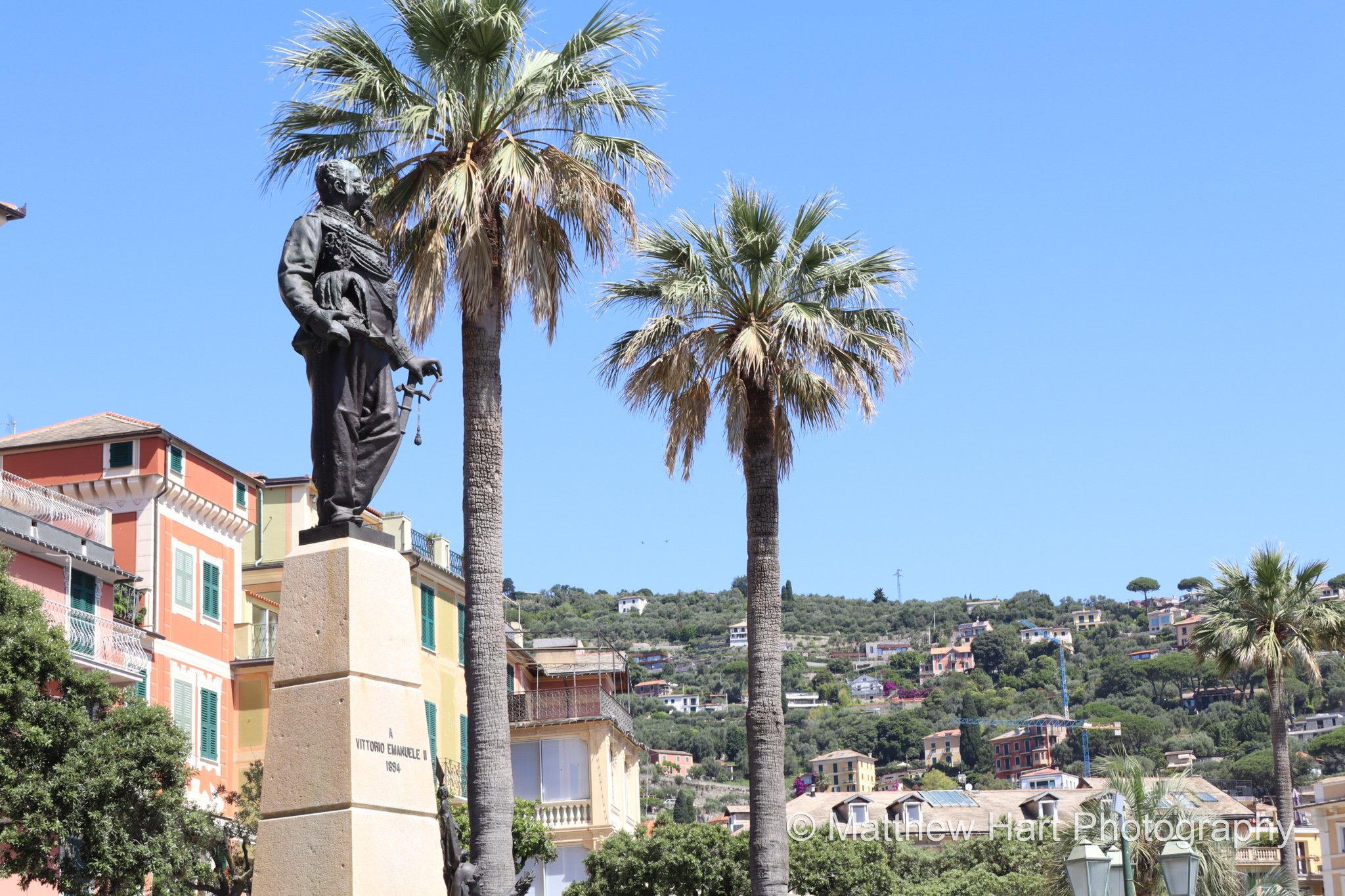
The bronze monument to Vittorio Emanuele II in Santa Margherita Ligure, dated 1894 on its stone pedestal, stands against a cloudless sky between tall fan palms. Behind it, painted façades with green shutters give way to a hillside dotted with villas.
Vittorio Emanuele II was the first king of a unified Italy, and towns across the country raised statues in his honor in the decades after unification. Here the formal figure shares the frame with palms and summer light, which turns a civic monument into something closer to a Riviera postcard.
Printed with pigment-based inks for lasting quality and rich tonal depth. Available on archival fine art paper, canvas, or metal.
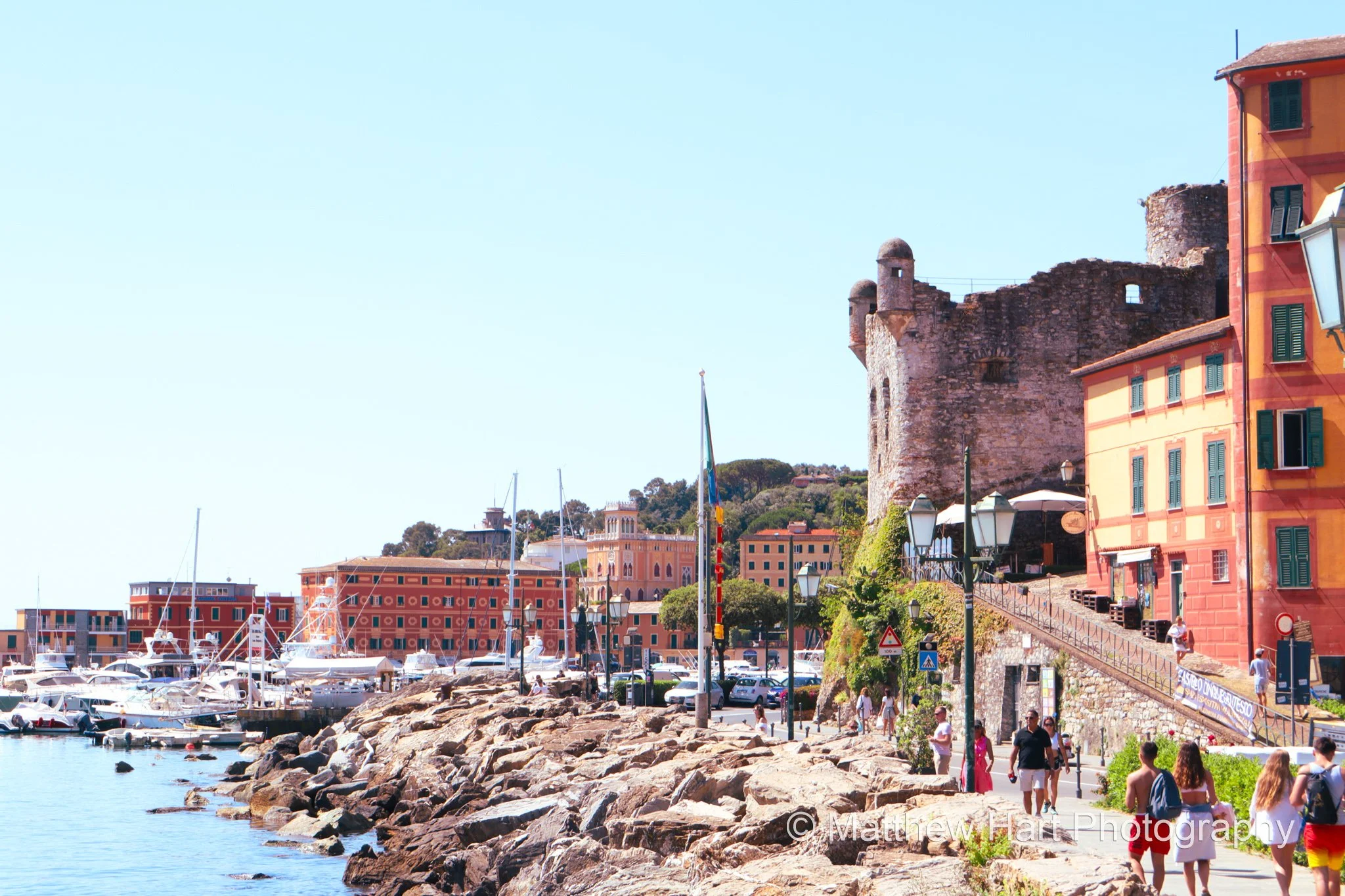
The sixteenth-century castle at Santa Margherita Ligure, its weathered stone walls and corner turrets rising beside painted townhouses in coral, ochre, and green-shuttered yellow. The rocky shoreline runs along the bottom of the frame, and the marina and hillside fill the background under a bright summer sky.
The Republic of Genoa built the fortress in 1550 to defend this stretch of coast against pirate raids. Today the waterfront promenade passes right beneath it, and the old stone sits easily among the color of the modern town.
Printed with pigment-based inks for lasting quality and rich tonal depth. Available on archival fine art paper, canvas, or metal.
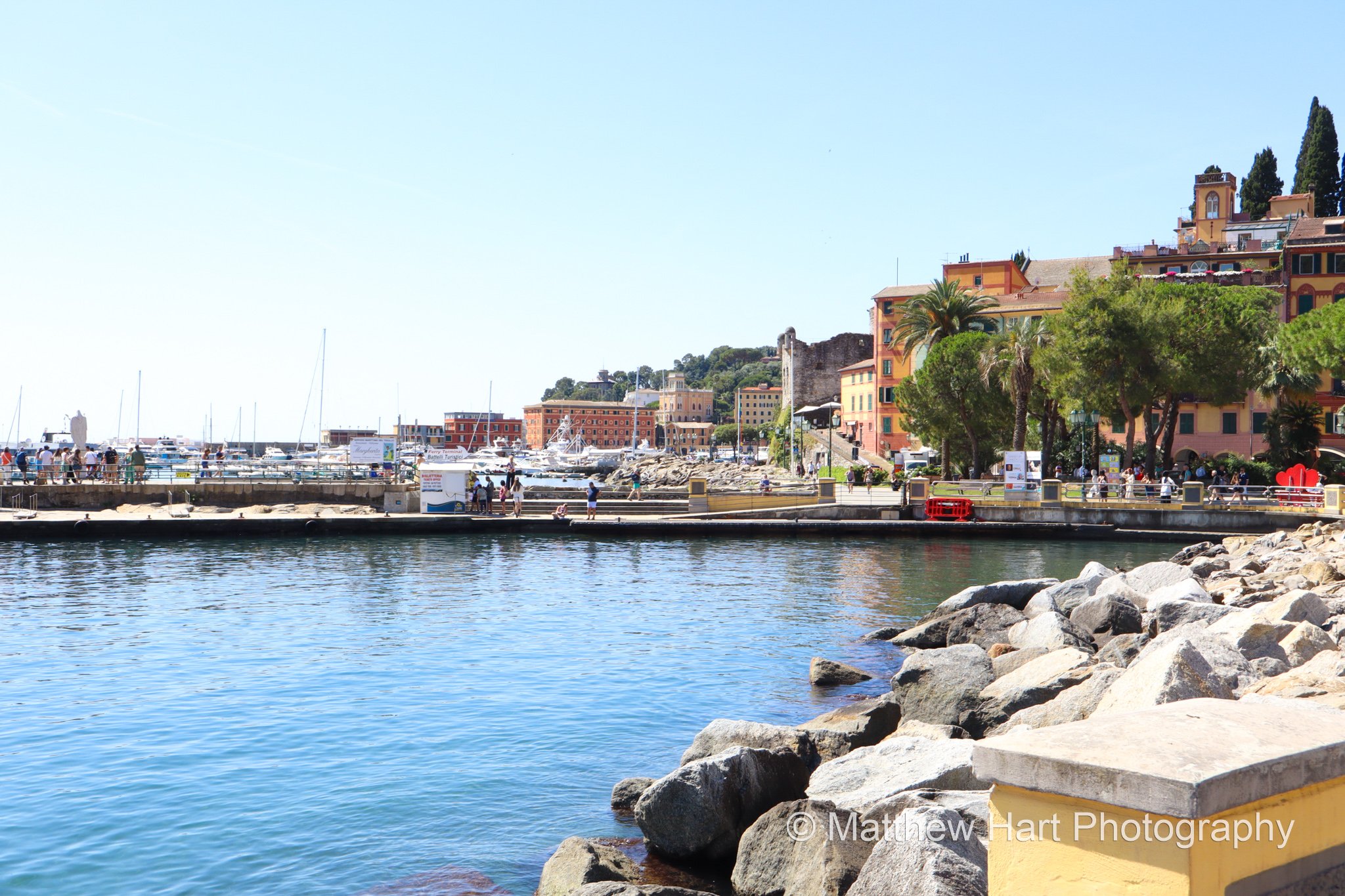
The harbor at Santa Margherita Ligure, seen from the stone breakwater. Pale boulders lead in from the lower right, still water holds the center, and the marina stretches across the middle of the frame beneath a row of warm Ligurian façades, umbrella pines, and the hillside above.
Santa Margherita was a fishing harbor long before it became a summer destination, and the marina still holds boats of every size, with the old town close behind. The rocks give the scene weight; the water gives it calm.
Printed with pigment-based inks for lasting quality and rich tonal depth. Available on archival fine art paper, canvas, or metal.
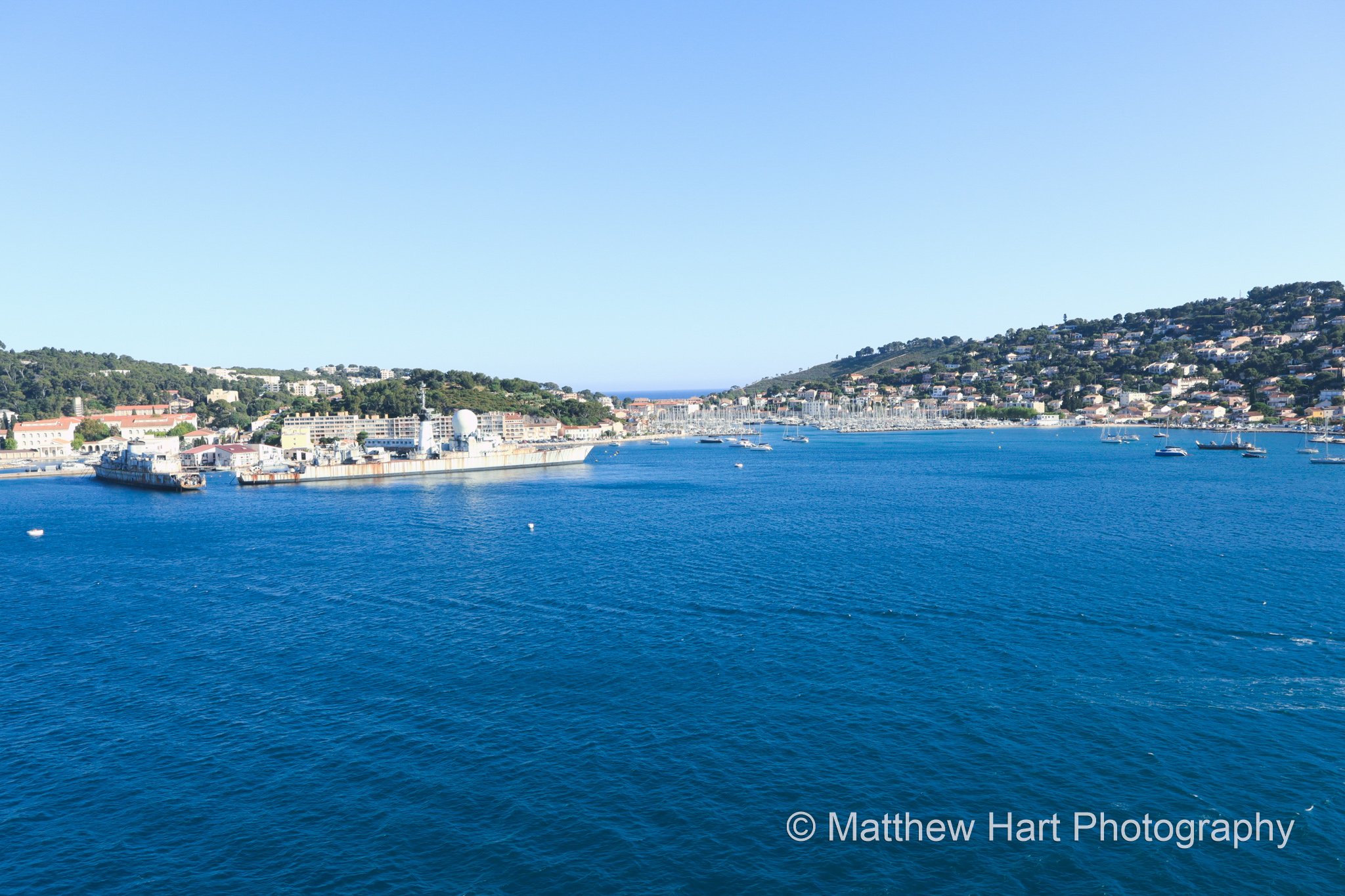
A wide bay on the Italian Riviera, seen from the water. Deep cobalt fills the lower half of the frame, and a long ridge of hillside towns runs along the far shore, pale buildings stepping down through green slopes to the waterline. A few small boats sit far out on the surface, and a clear sky carries the rest.
This is the Ligurian coast at its simplest: water, hills, and the scattered towns that have lived between them for centuries. The composition is mostly open space, which gives it a calm, breathing quality on a wall.
Printed with pigment-based inks for lasting quality and rich tonal depth. Available on archival fine art paper, canvas, or metal.
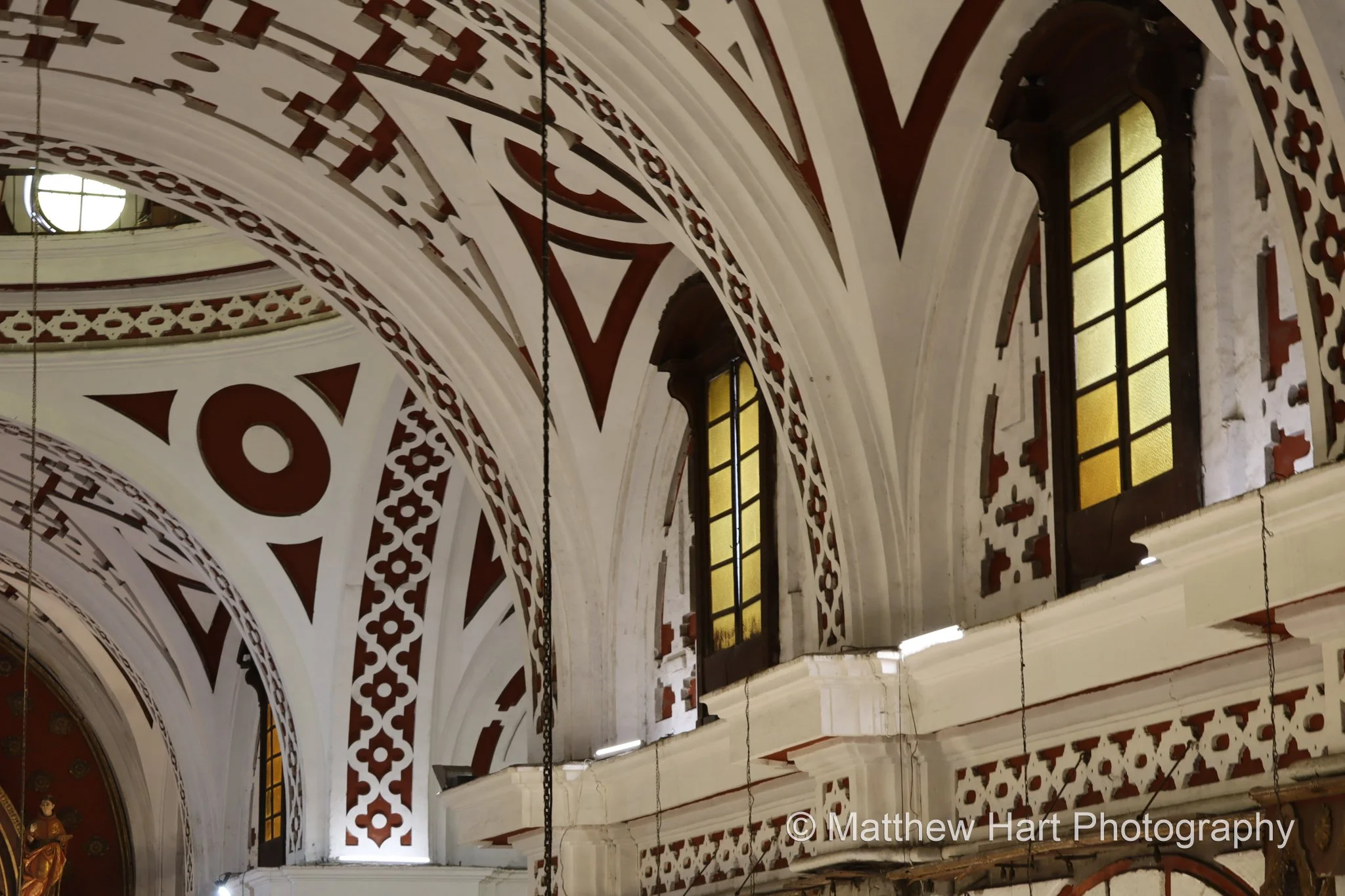
The painted groin vaults of La Merced Basilica fill the frame — their white plaster surfaces covered in crimson geometric ornament — while two tall amber-glass clerestory windows glow with warm yellow light on the right wall. The chains of the chandeliers descend from the centre of the vault. Along the wall below, visible damage and patching speaks to the age and history of the structure.
Photographed at an angle that compresses the three bays into a single layered composition, this image captures the formal rhythm of the colonial vault system and the warmth the amber windows introduce into an otherwise cool interior palette. A detailed architectural study of one of Lima's most significant baroque interiors.
Printed with pigment-based inks for lasting quality and rich tonal depth. Available on archival fine art paper, canvas, or metal.
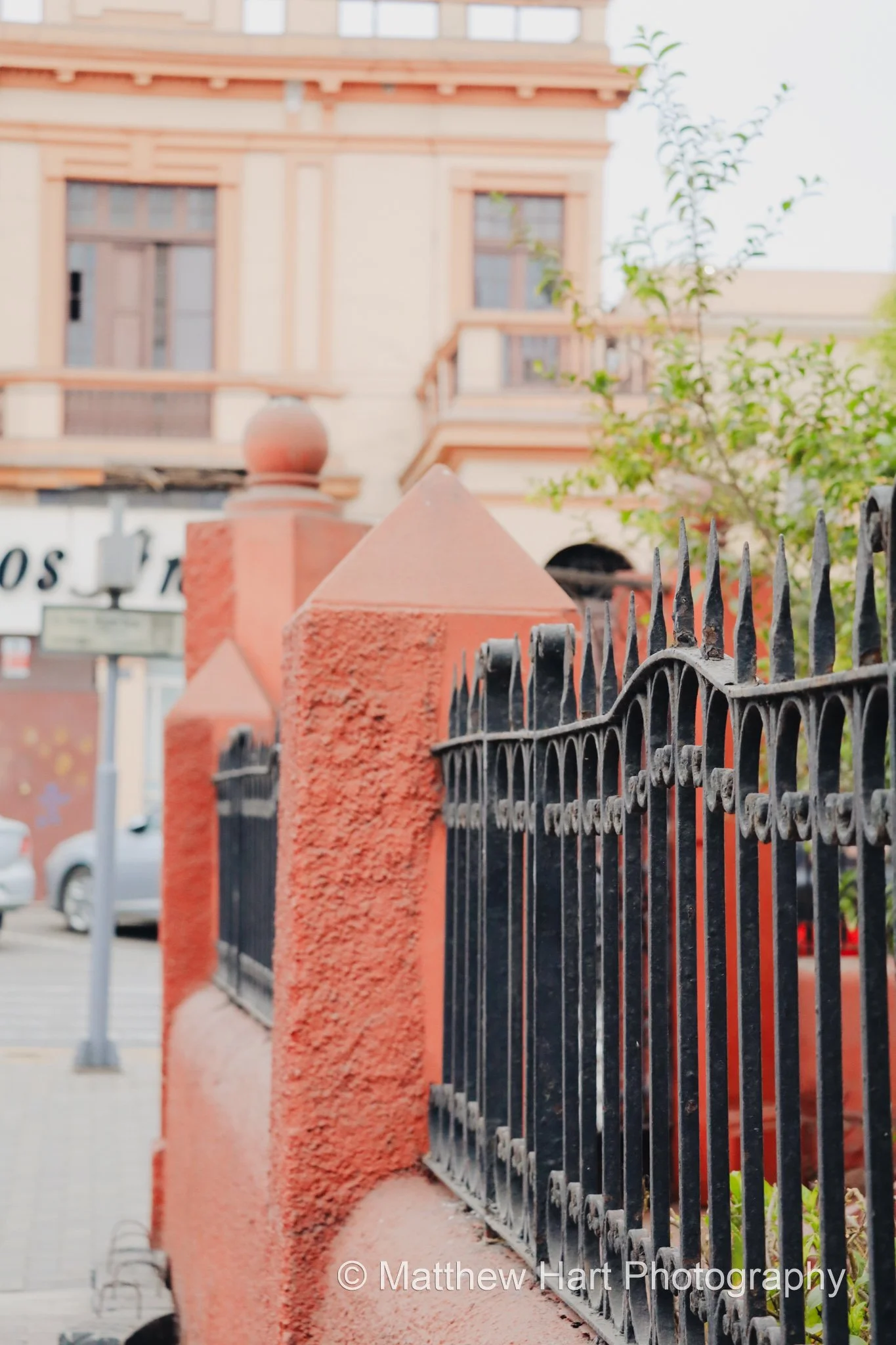
A terracotta stucco pillar with its pyramidal cap fills the left foreground in sharp focus, black wrought iron spears rising from its base in a pointed fence that recedes into bokeh. Beyond, the pale warm facade of a neoclassical building blurs into the background, its upper balcony and cornice suggesting the scale of the street without competing for attention.
Lima's historic streets are full of this kind of precision — decorative ironwork and stucco construction that has outlasted the city's various modernisations, maintained not because it is fashionable but because it works. A composed architectural detail image with strong graphic qualities, suited to contemporary interiors that favour restraint over colour.
Printed with pigment-based inks for lasting quality and rich tonal depth. Available on archival fine art paper, canvas, or metal.
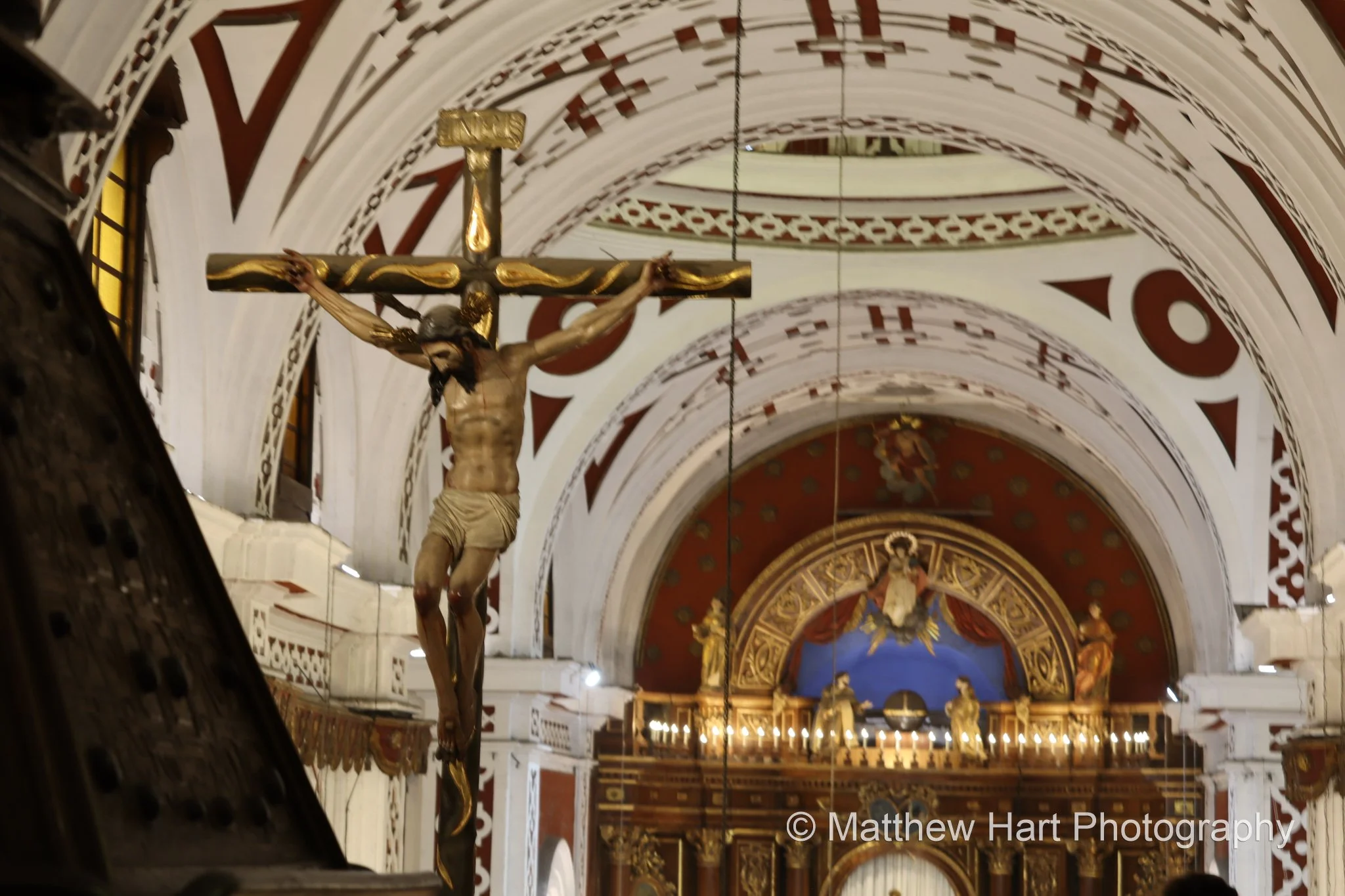
A gilded wooden crucifix hangs suspended above the nave of La Merced, one of Lima's oldest colonial churches, its crossbar casting a wide horizontal line against the painted vaults overhead. Behind it, the baroque altar glows at the end of the nave — gold leaf and blue enamel framed by an arched apse — while the ceiling repeats its pattern of crimson triangles, circles, and geometric tilework across every surface.
La Merced traces its origins to 1535, the year Lima was founded, and its interior bears the full weight of that history. This image captures the two great presences of the space in a single frame: the crucifix in the foreground and the altar at depth, connected by the painted ceiling vault between them. A significant architectural and devotional print for collectors drawn to sacred spaces and colonial heritage.
Printed with pigment-based inks for lasting quality and rich tonal depth. Available on archival fine art paper, canvas, or metal.
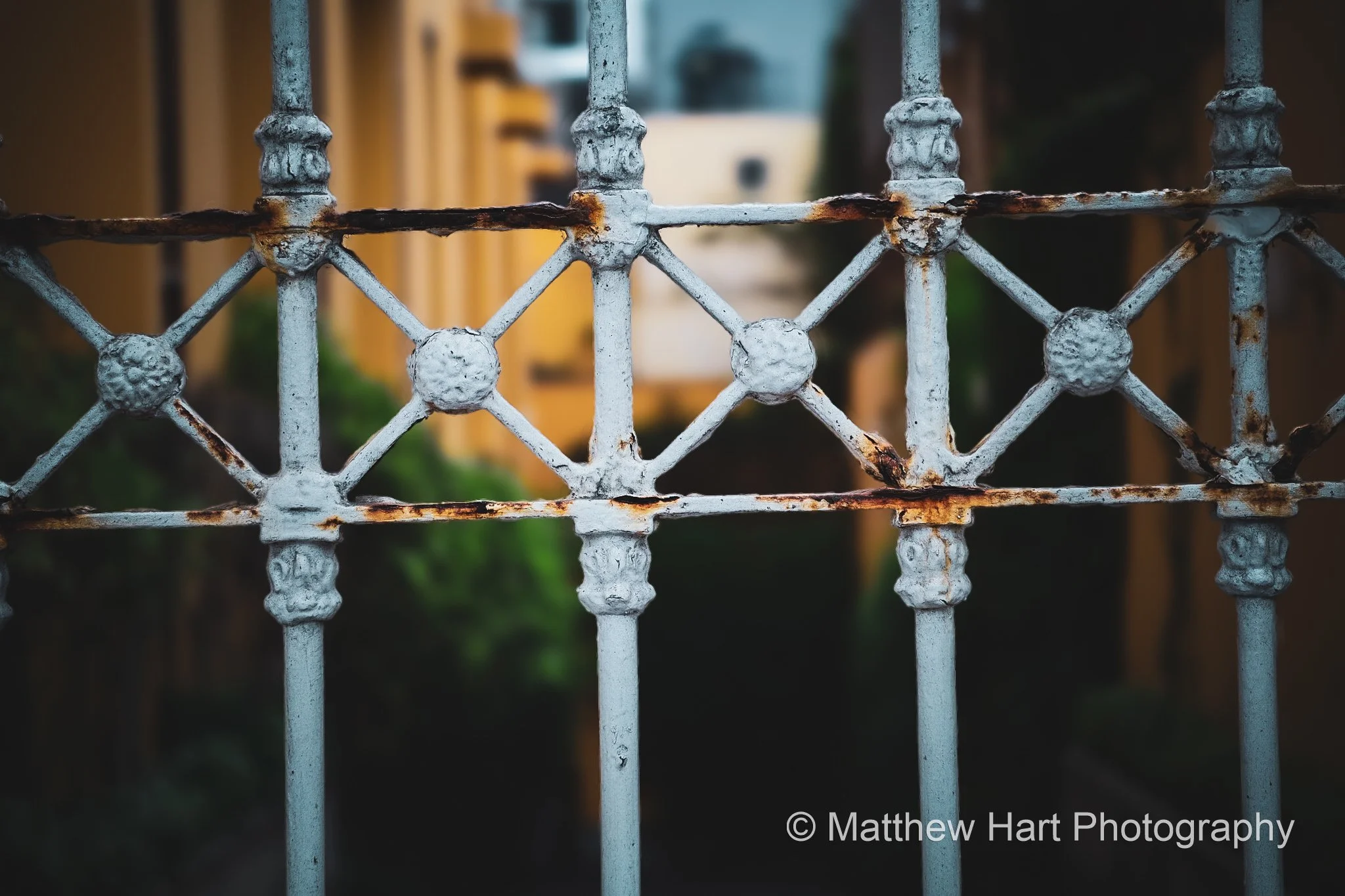
A close-up of a cast iron fence in Lima, its pale blue-grey paint peeling away to reveal rust blooming along the horizontal rails — orange-brown against the cool blue-grey of the remaining paint. Decorative cast bosses punctuate the intersections of the fence's geometric pattern, and beyond the bars, the warm ochre yellow of a residential building glows in soft focus with green garden foliage at its base.
Time written in iron. The rust is not damage — it is patina, the evidence of decades of Lima's coastal humidity doing its slow work on painted metal. Against the warm ochre background the effect is considered and almost painterly. A fine art detail image for collectors who appreciate the beauty of materials aging honestly.
Printed with pigment-based inks for lasting quality and rich tonal depth. Available on archival fine art paper, canvas, or metal.
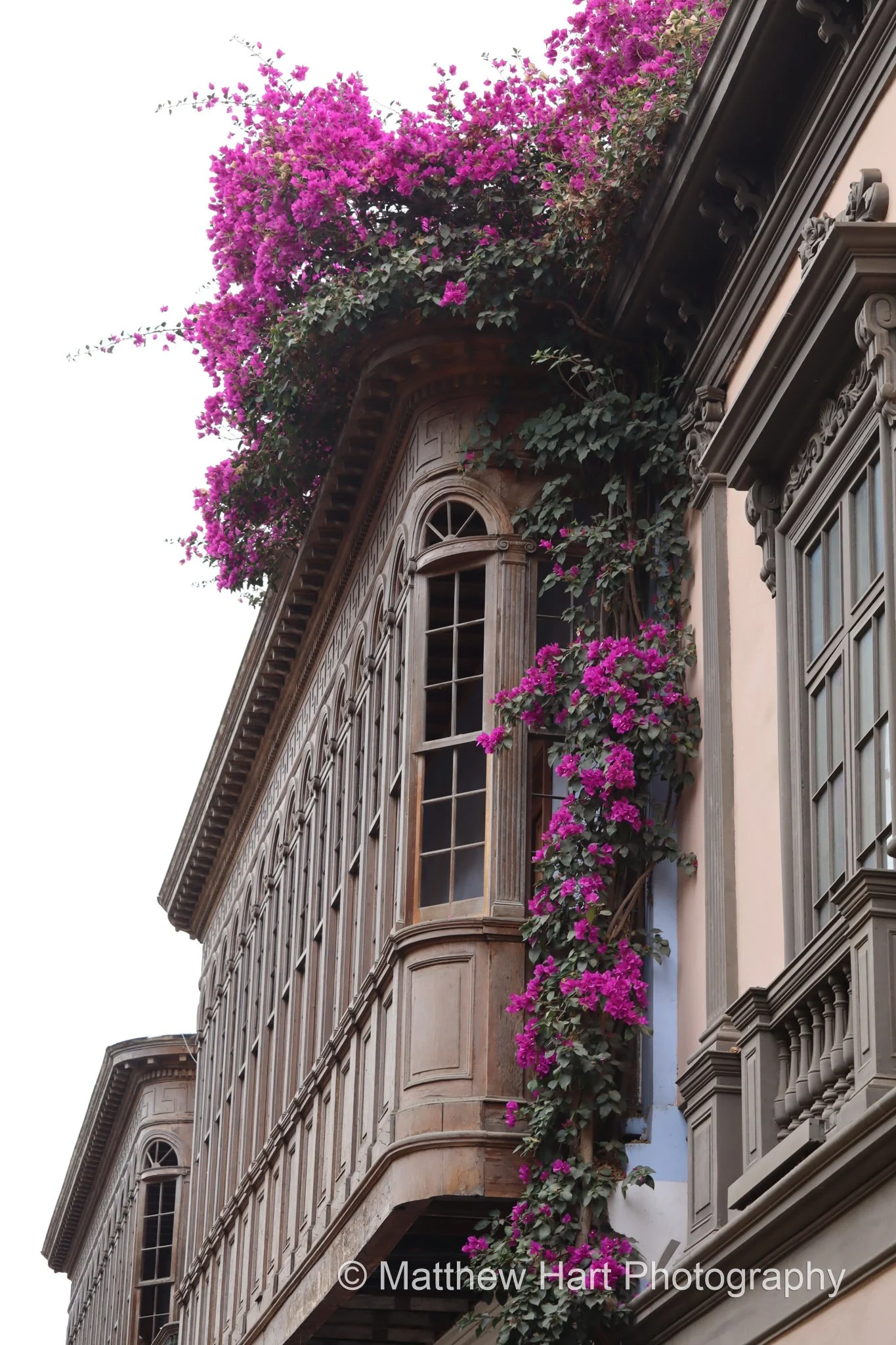
Magenta bougainvillea erupts from a rooftop planter and cascades down the corner of a Lima colonial building, its flowers against the weathered carved wood of a traditional Limeño balcony — the kind of enclosed wooden gallery that is one of the city's most distinctive architectural features. Ivy climbs alongside it, and the pale Lima sky bleaches the background to white, making the magenta and the wood the only subjects that matter.
The traditional wooden balcony (balcón limeño) is a defining feature of Lima's UNESCO-listed historic center — an enclosed wooden gallery that evolved from Moorish antecedents through the Spanish colonial period. This image captures it at its most considered: wrapped in bougainvillea, still in use, still standing.
Printed with pigment-based inks for lasting quality and rich tonal depth. Available on archival fine art paper, canvas, or metal.
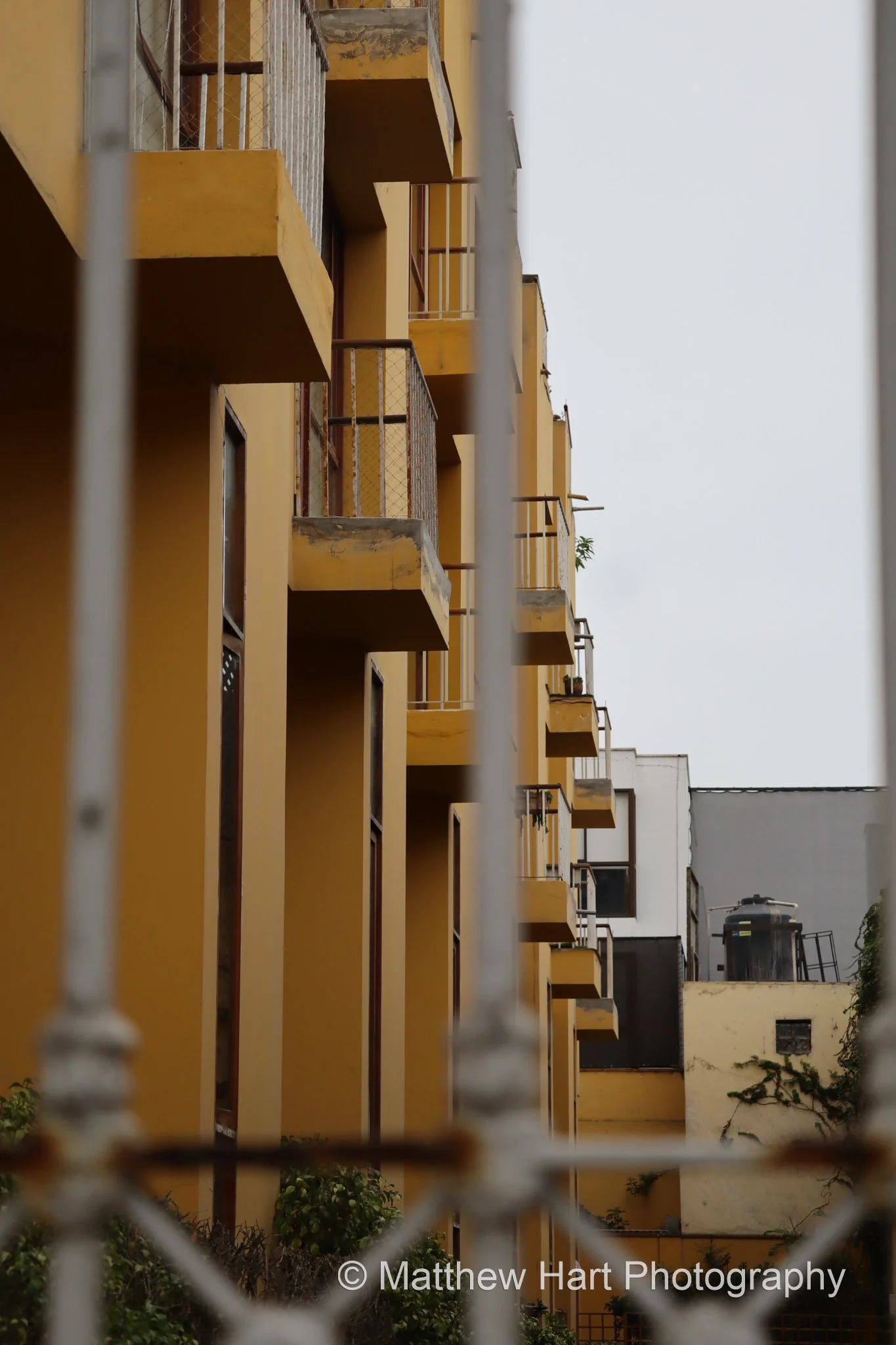
The warm ochre yellow facade of a Lima apartment building fills the right of frame, its cantilevered concrete balconies stacked and receding in tight perspective toward a pale sky. A white fence in the near foreground frames the composition, its decorative elements soft and out of focus, while a glimpse of green garden and a rooftop water tank anchor the building in its urban context.
Abstract in its approach but entirely grounded in Lima's residential reality — the ochre yellow of mid-century concrete construction, the repetition of the balcony form, the flat garúa light that removes shadow and emphasises geometry. An unexpected architectural print for collectors drawn to the urban vernacular of Latin American cities.
Printed with pigment-based inks for lasting quality and rich tonal depth. Available on archival fine art paper, canvas, or metal.
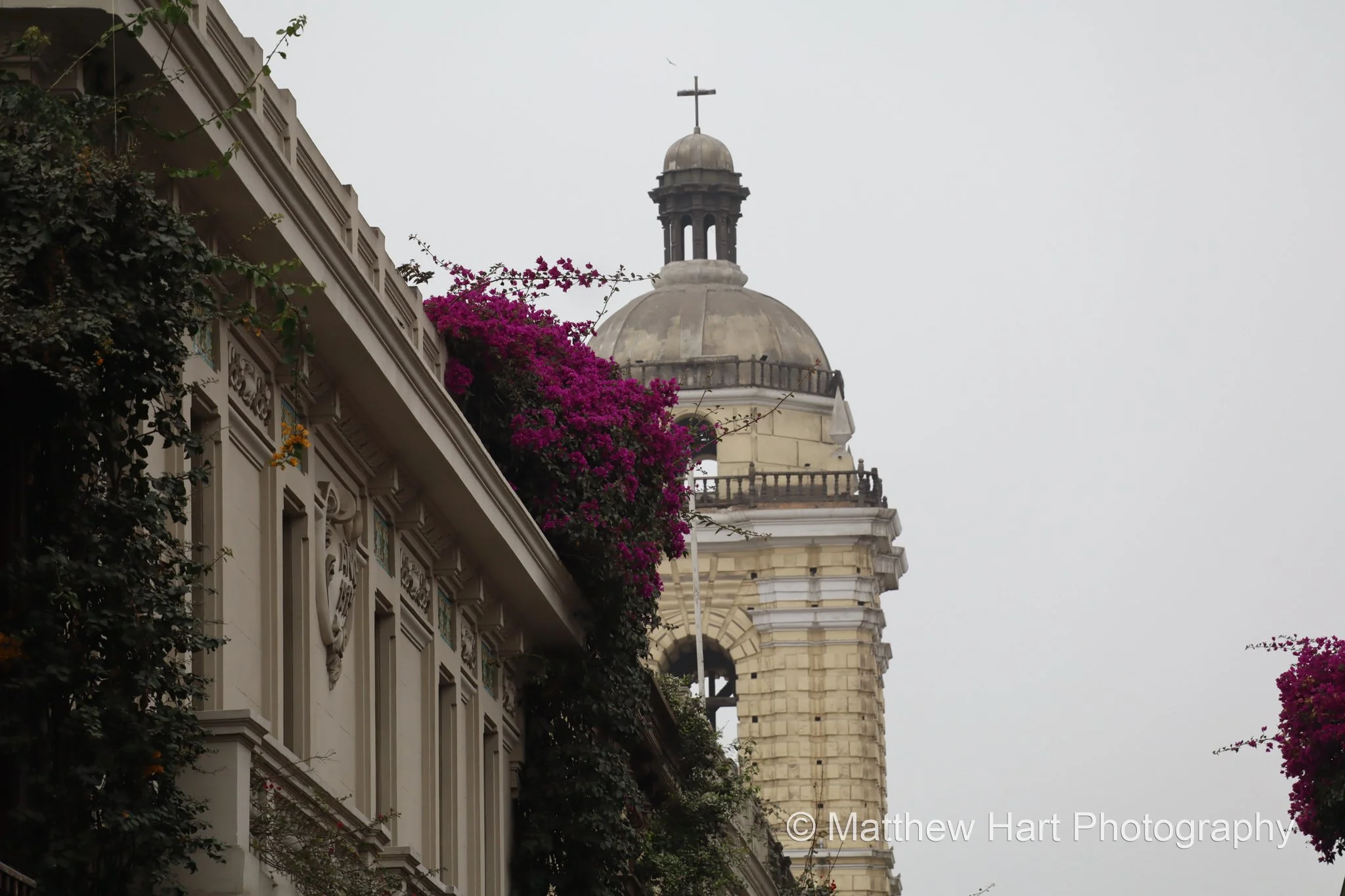
The stone dome of a Lima church rises in the mid-ground, its lantern and cross silhouetted against a pale grey sky, while cascades of magenta bougainvillea spill from a building in the foreground and lower right. A neoclassical colonial facade runs diagonally from the lower left, its plasterwork detailed with shield cartouches and window moldings, the whole scene layered with the particular visual density that Lima's Centro Histórico produces at every corner.
The church dome, the colonial facade, and the bougainvillea exist in the same frame as a natural composition that neither the photographer nor the city arranged — it simply is. That quality of unstaged beauty is what makes this image work. A distinctive Lima print for collectors who know the city or want to.
Printed with pigment-based inks for lasting quality and rich tonal depth. Available on archival fine art paper, canvas, or metal.
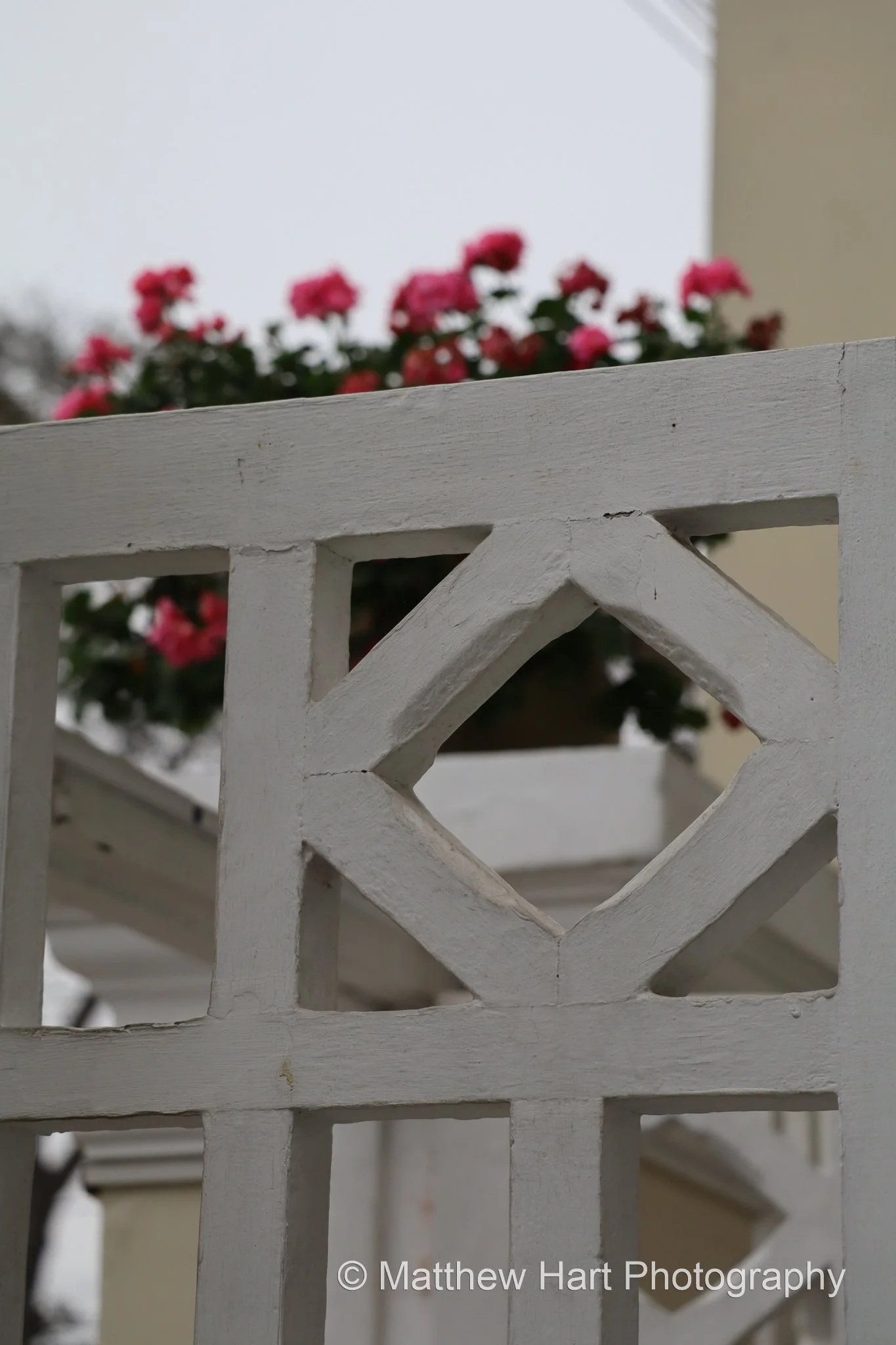
A single panel of a white painted concrete fence fills the frame in close detail — its upper section in vertical bars, its lower section in a repeating diamond-within-square lattice — while a mass of pink geraniums blooms in soft focus behind it. The pale architecture of a Lima building occupies the upper right background, barely distinguishable from the grey garúa sky.
A companion to Reja Blanca, this composition returns to the same white lattice with a warmer floral counterpoint. The white-on-pink palette is understated. For collectors who prefer art that works without demanding attention.
Printed with pigment-based inks for lasting quality and rich tonal depth. Available on archival fine art paper, canvas, or metal.
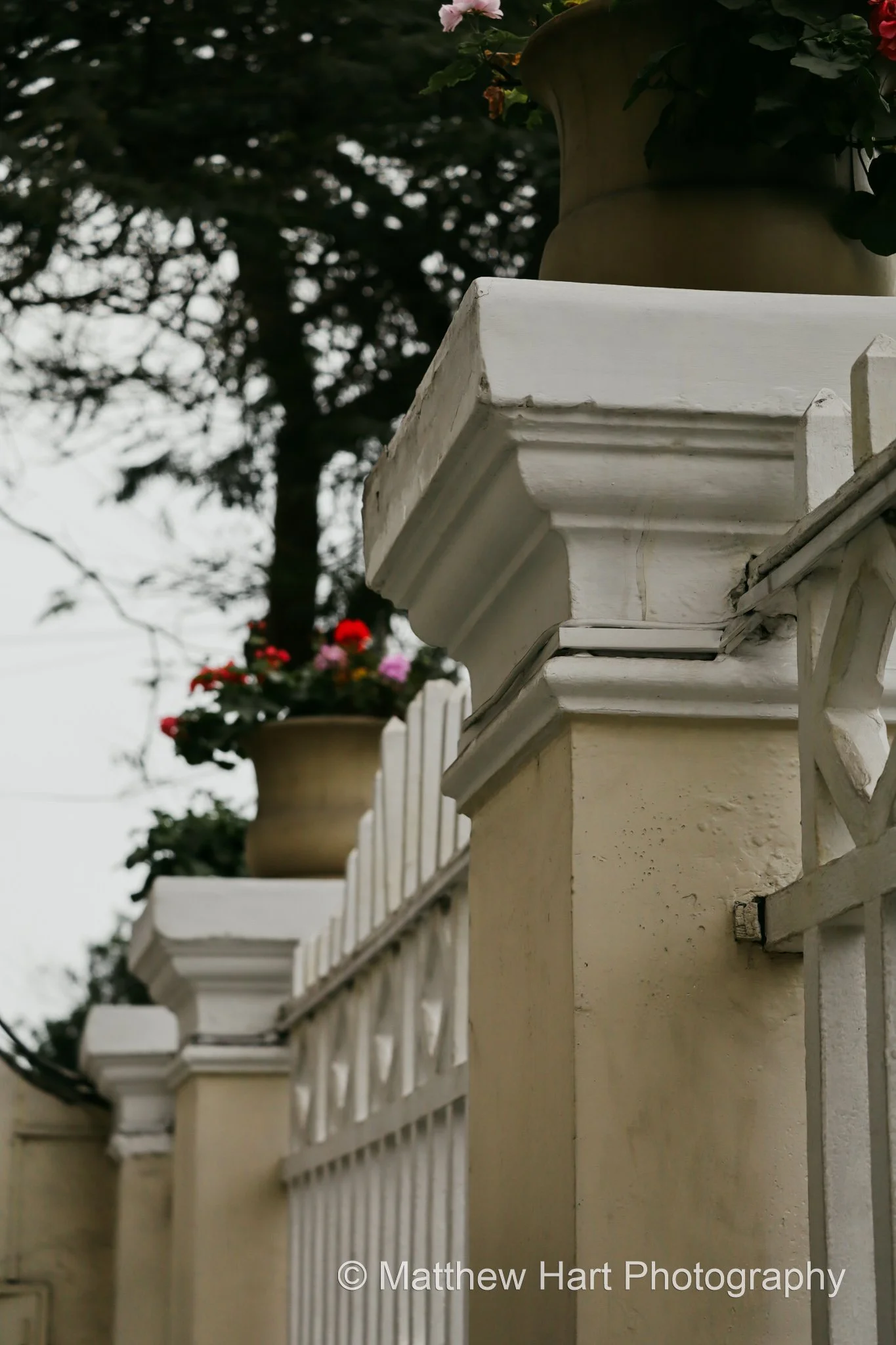
A row of white-capped fence pillars recedes into shallow focus along a Lima street, stone urns of red and pink geraniums set atop them, while white lattice panels run between the pillars and the dark canopy of a mature tree fills the upper background. The composition is spare and deliberate: white geometry, warm cream stucco, and the suggestion of an ordered garden.
This kind of detail — the moulded pillar caps, the planted urns, the careful upkeep of a Lima residential fence — speaks to the domestic elegance that coexists with the city's more monumental architecture. A refined architectural detail print that works in both contemporary and traditional interiors.
Printed with pigment-based inks for lasting quality and rich tonal depth. Available on archival fine art paper, canvas, or metal.
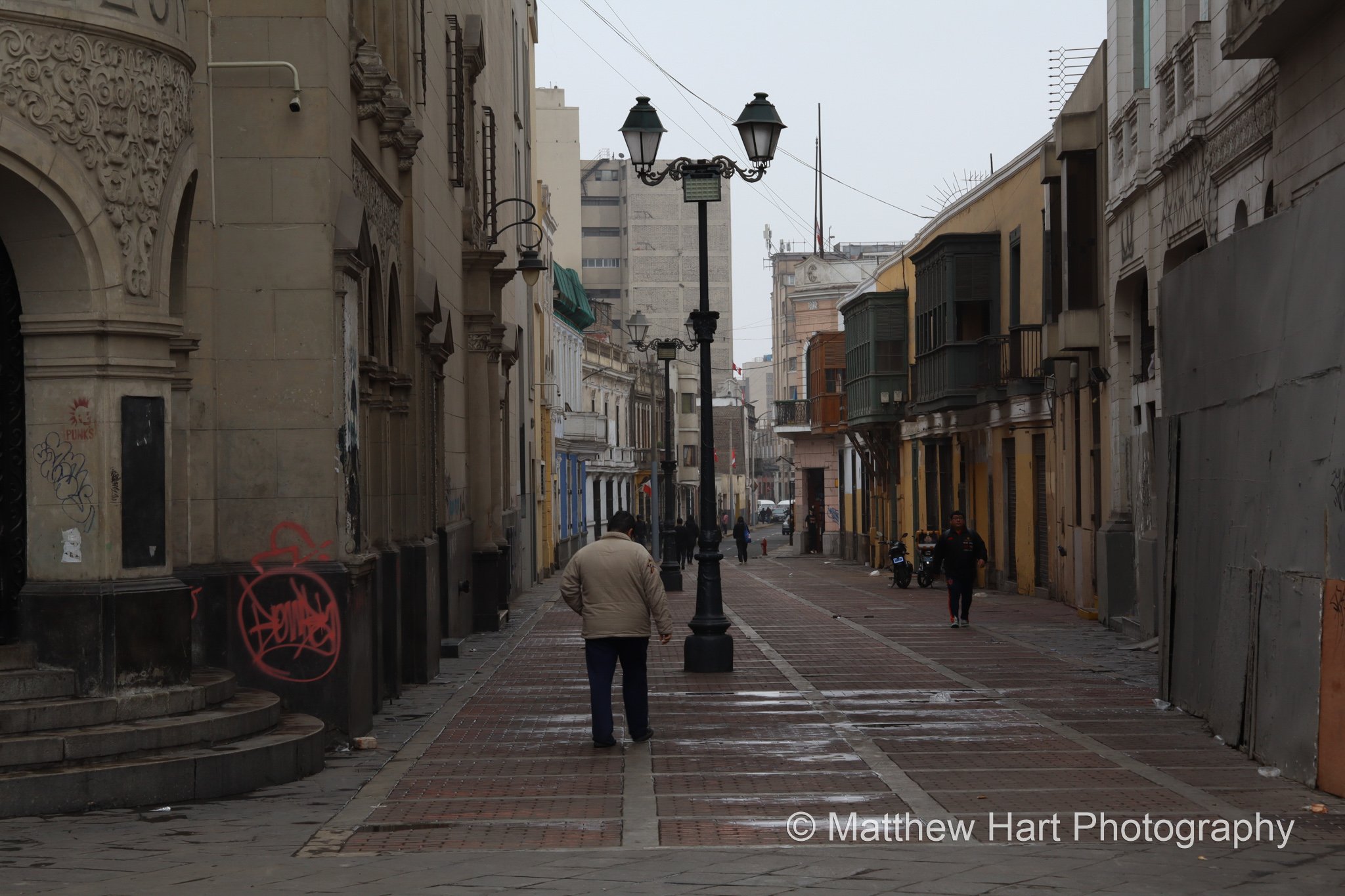
A single walker moves away from the camera down a Lima historic center pedestrian street, the brick pavement still damp from garúa drizzle, a double lamppost marking the center of the composition. Colonial and Republican-era buildings line both sides — some ornate, some patched with contemporary signage, all carrying the layered history of a city that has been continuously inhabited for five centuries. The street recedes toward a horizon of more buildings, more flags, more Lima.
Quiet and unguarded, this is the Lima that exists before the tourist day begins — or after it ends. The walker in the foreground gives the image its scale and its solitude. A travel print that resonates with anyone who has walked these streets at their emptiest and felt the city most clearly.
Printed with pigment-based inks for lasting quality and rich tonal depth. Available on archival fine art paper, canvas, or metal.
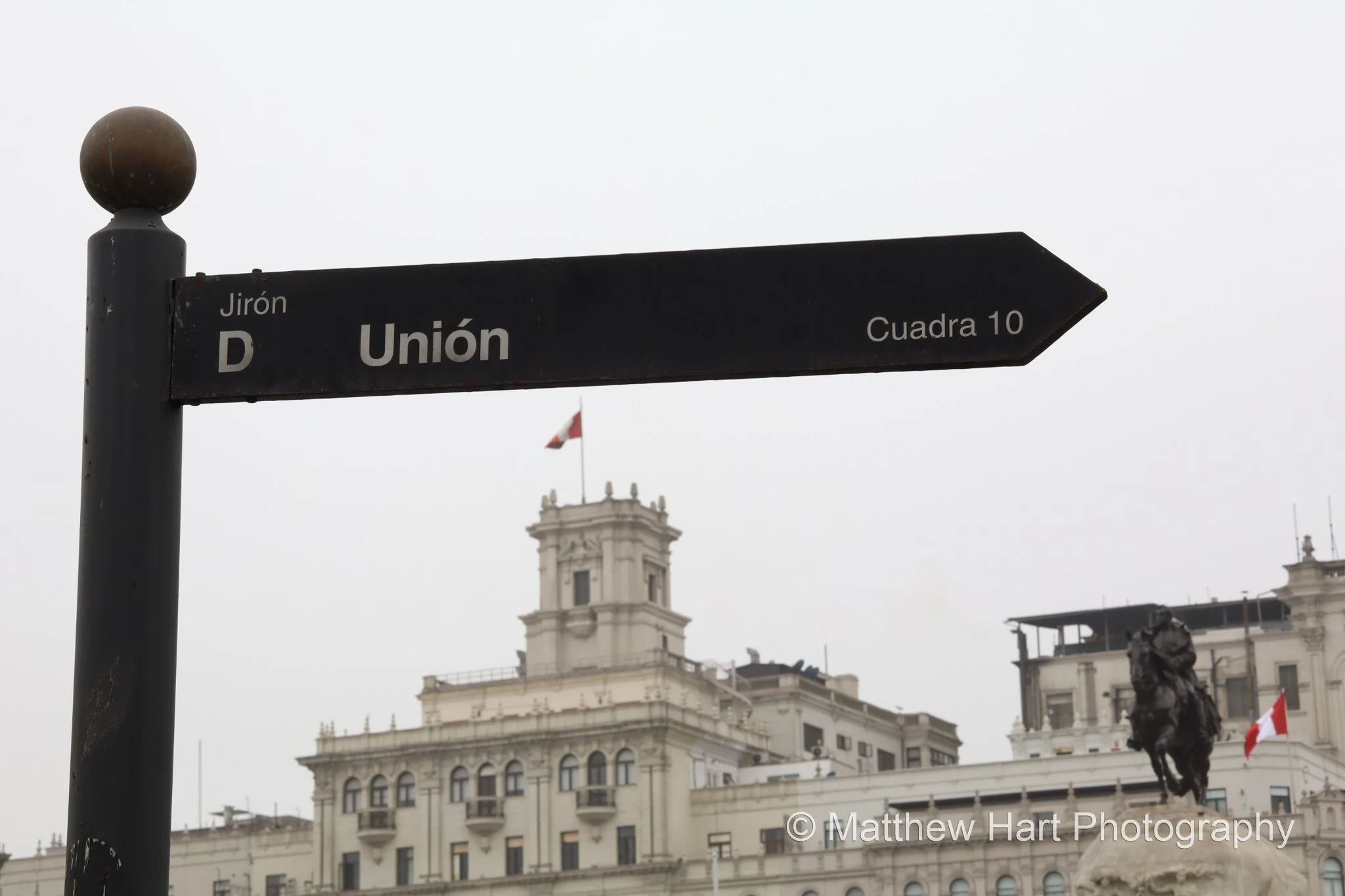
A classic black street sign for Jirón Unión — Lima's most historic pedestrian thoroughfare — runs across the frame, pointing the viewer toward the neoclassical buildings of Plaza San Martín behind it. An equestrian statue is visible in silhouette at right, and Peruvian flags fly from both flanking buildings. The garúa sky bleaches the background to near-white, making the sign's graphic black arrow the dominant element.
Graphic, editorial, and distinctly Limeño. This is the kind of image that resonates with travelers who walked this street — and draws in those who haven't yet. The Jirón Unión sign is as emblematic of Lima's historic center as any of its monuments.
Printed with pigment-based inks for lasting quality and rich tonal depth. Available on archival fine art paper, canvas, or metal.
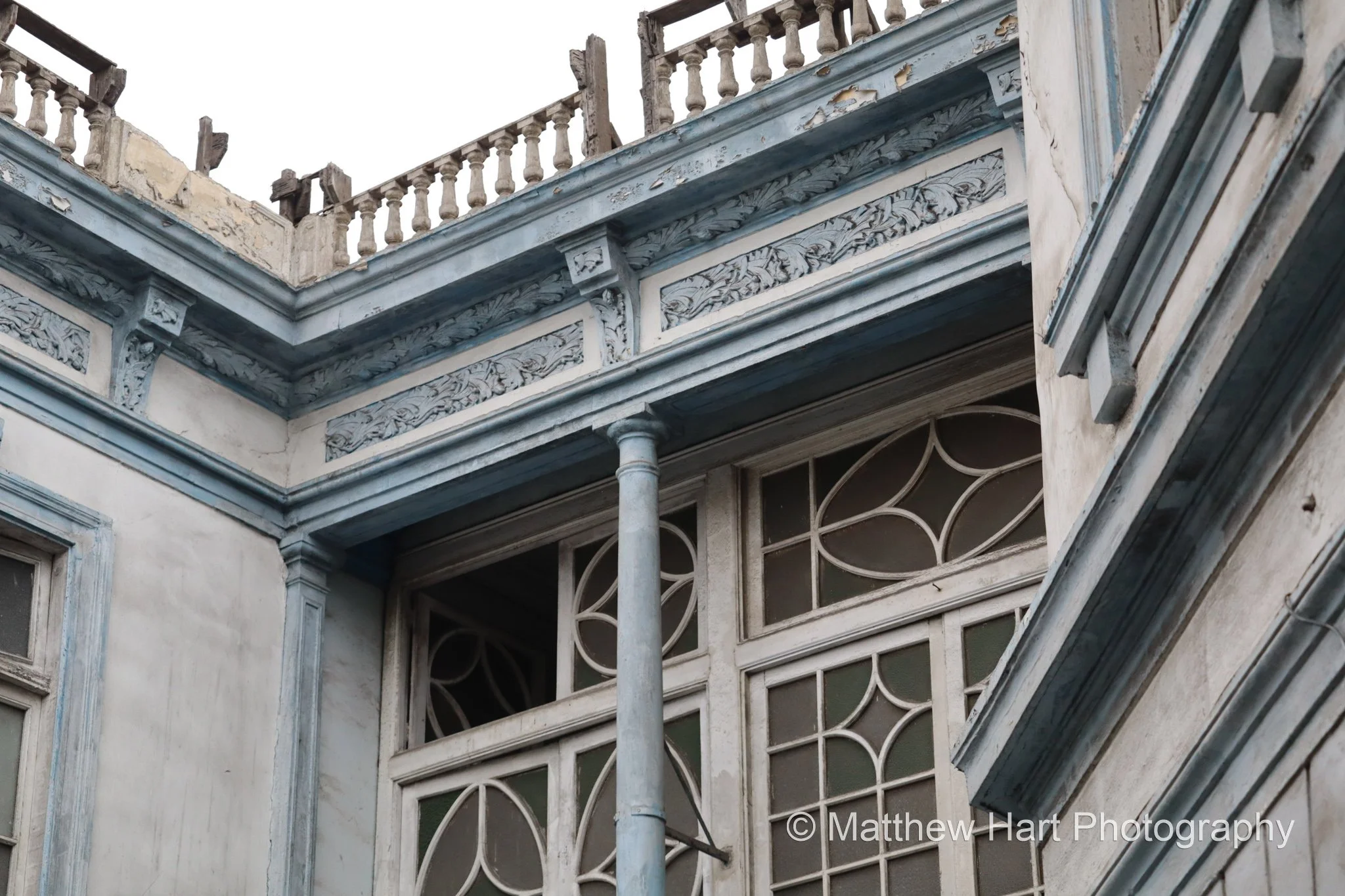
The upper corner of a Lima Republican-era building is caught in close detail: a carved plaster cornice runs the full length of the frame in acanthus-leaf relief, painted in a weathered blue-grey that speaks to decades of coastal humidity and deferred maintenance. Below it, geometric window grilles in white and grey intersect at precise angles, their curving, petal-like tracery a legacy of early 20th-century ornamental taste. A single drainpipe runs vertically through the composition.
Lima's historic center is full of buildings like this — ambitious, once-grand, slowly surrendering to time. This image finds the beauty in that surrender. An architectural detail print for collectors drawn to the layered history of Latin American cities and the particular poetry of decay.
Printed with pigment-based inks for lasting quality and rich tonal depth. Available on archival fine art paper, canvas, or metal.
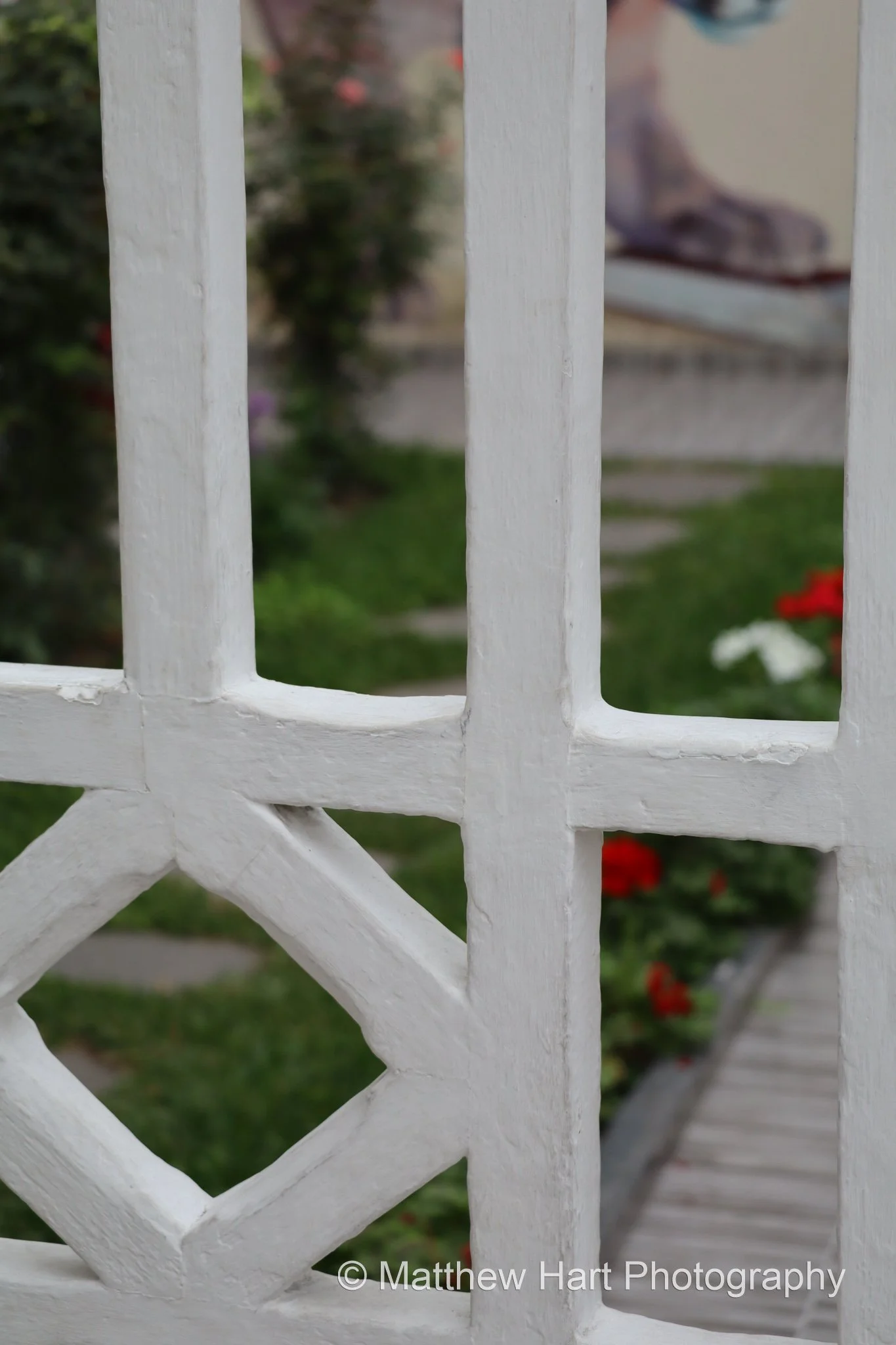
A white painted concrete fence fills the frame in close architectural detail — its upper section in vertical bars, its lower section transitioning into a diamond-within-rectangle lattice — while a green lawn with red and white flowers sits soft behind it.
The white geometry of the fence against the green and red of the garden creates a quiet tension between the constructed and the natural. The image works as pure composition — the interplay of line and colour — while remaining entirely grounded in the residential fabric of a Lima street.
Printed with pigment-based inks for lasting quality and rich tonal depth. Available on archival fine art paper, canvas, or metal.
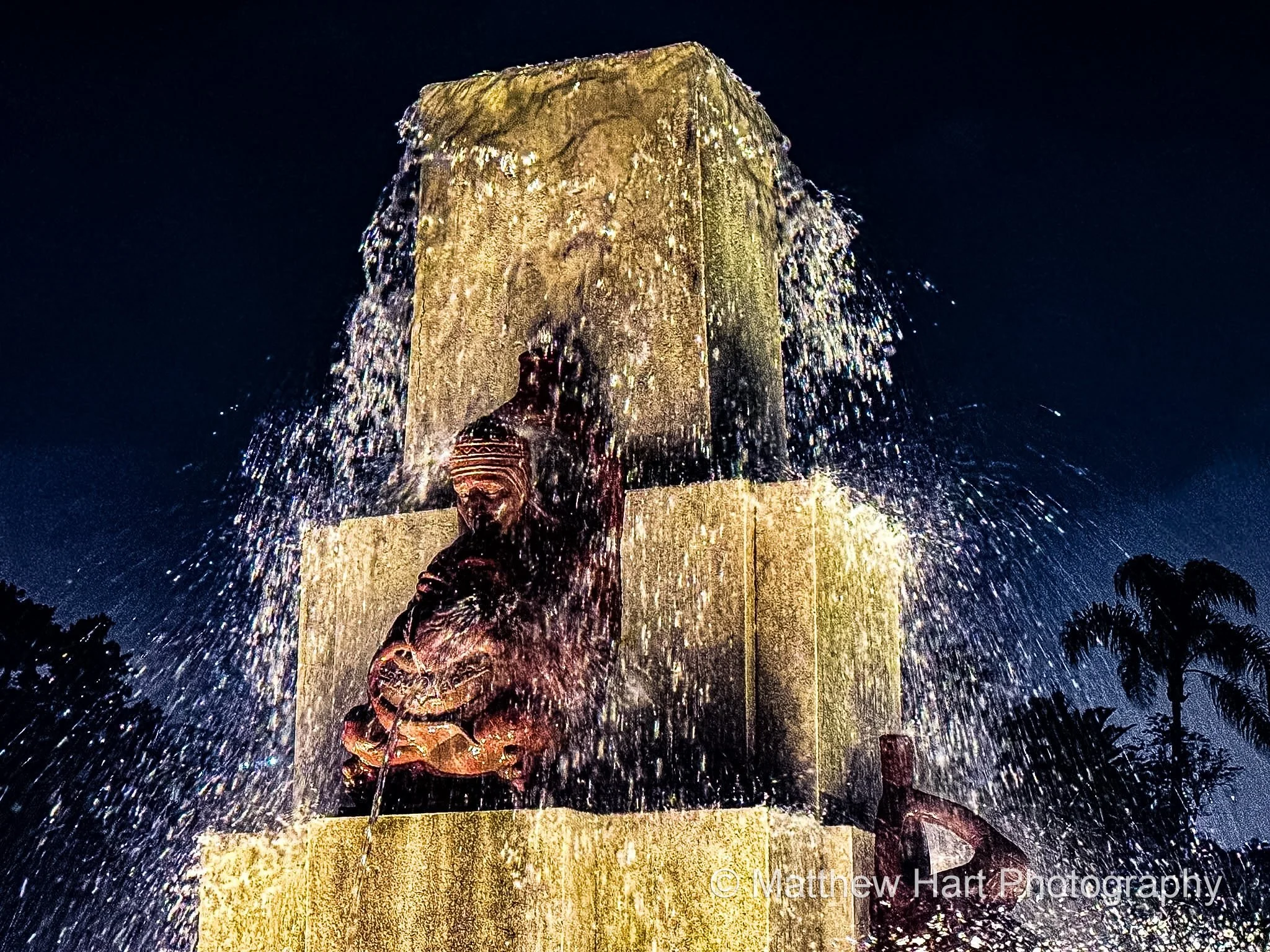
The Figure in Water — Inca Fountain Fine Art Print, Lima Peru
An Inca-robed bronze figure sits at the center of the fountain's upper tier, water cascading over and around it in heavy curtains while uplighting turns the stone golden against a deep blue-black Lima sky. Shot at extreme close range, the figure fills the frame — its headdress and raised hands visible through the rush of falling water, the city lights and palm silhouettes barely visible at the edges. The combination of the ancient subject, the theatrical water and light, and the depth of the night sky gives this image a mythological quality that sets it apart. For collectors drawn to the intersection of Andean heritage and contemporary urban drama. Printed with pigment-based inks for lasting quality and rich tonal depth. Available on archival fine art paper, canvas, or metal.
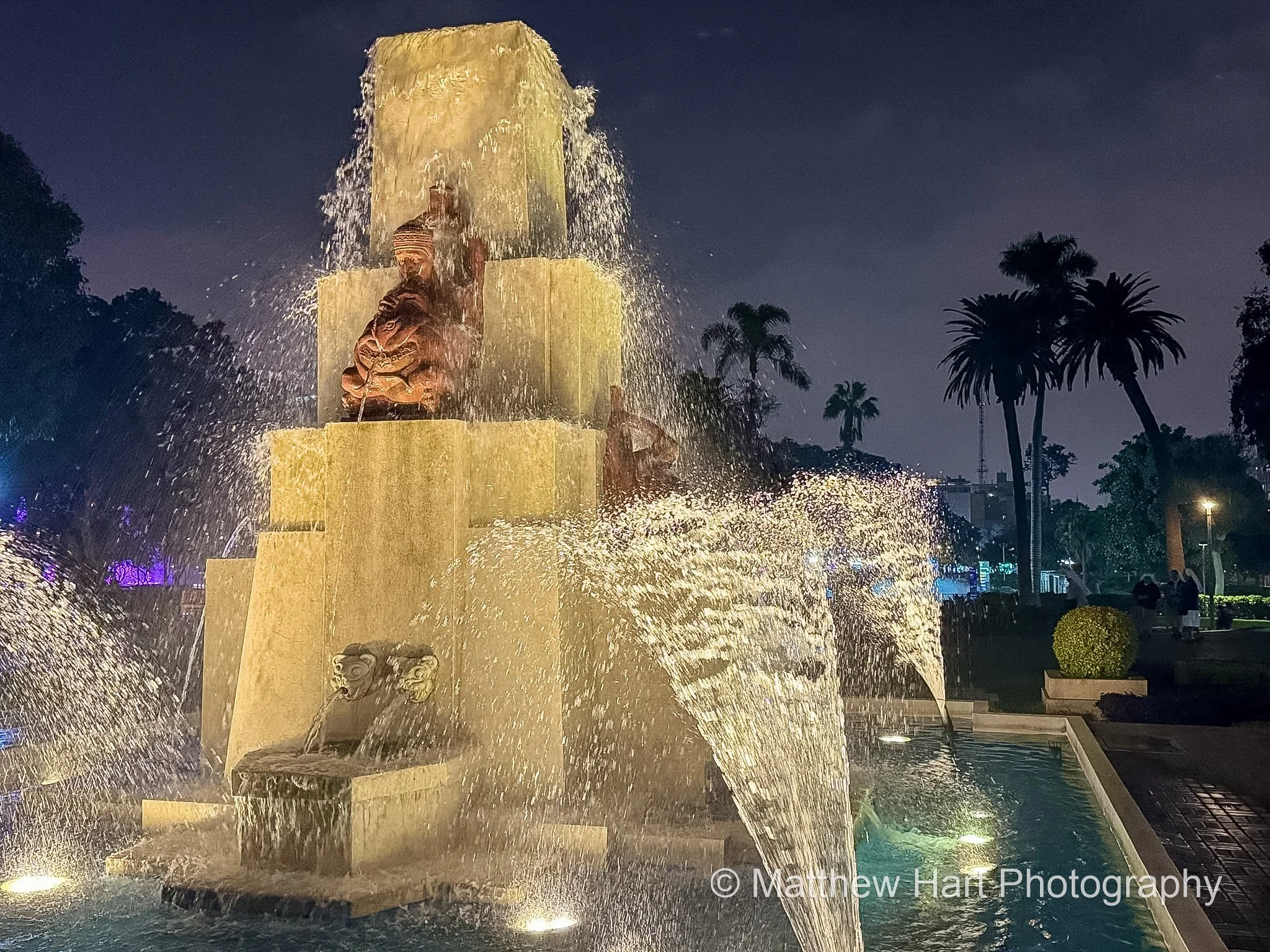
Water and Stone — Lima Fountain Detail Fine Art Print, Peru
A tighter perspective on the same tiered Lima fountain, pulling the camera closer to reveal the individual bronze figures at each level and the raw physicality of the cascading water. Palm silhouettes break the right horizon, and the city glows purple and green in the distance behind the fountain's spray. The Inca-inspired figures on the fountain's tiers are visible in warm illumination against the rushing water. Where the wider view captures the fountain's formal composition, this frame brings energy and texture — the figures emerging through the water, the droplets caught mid-air, the city visible through the spray. A natural companion piece to the full-view print. Printed with pigment-based inks for lasting quality and rich tonal depth. Available on archival fine art paper, canvas, or metal.
The Lincoln Memorial in silhouette against a bright, hazy sky, with the sun sitting just above its roofline and a faint sundog glowing to the right. Broad stone steps fill the lower part of the frame, and small silhouetted figures of visitors stand and sit along the top of the rise on either side.
Shooting into the light strips the memorial down to its geometry, the long horizontal roofline and the rhythm of its columns, while the visitors give the scene its scale. It feels less like a landmark photograph and more like a moment shared by strangers.
Printed with pigment-based inks for lasting quality and rich tonal depth. Available on archival fine art paper, canvas, or metal.